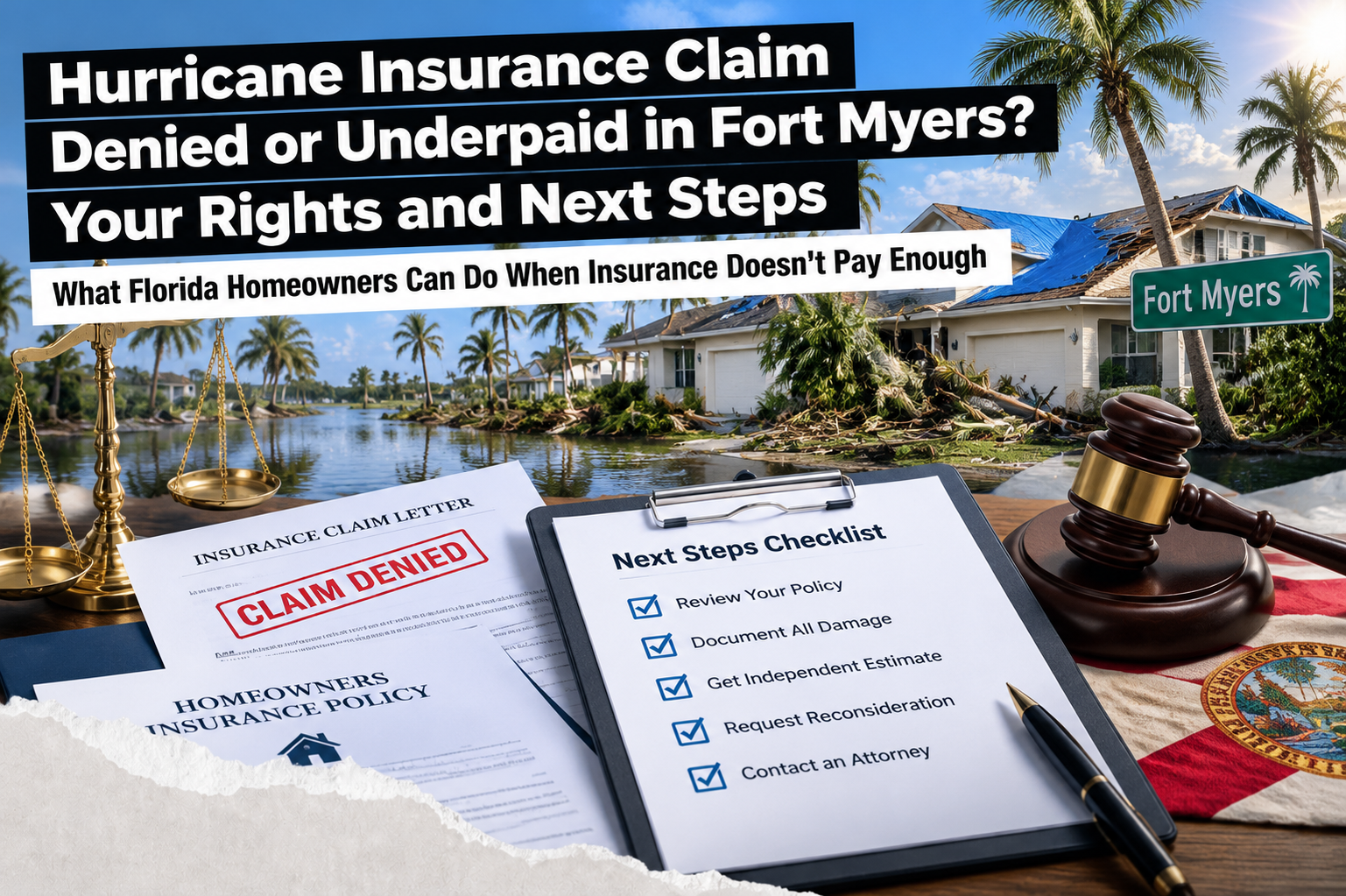
If you live in Fort Myers, you know the drill: the storm passes, the cleanup begins, and then the second storm arrives in the form of an insurance letter. Whether your claim was denied outright or paid at a fraction of your repair bill, you have more options than most adjusters will mention. Here’s the short version, then the details.
Quick Answer: If your hurricane claim was denied or underpaid, you generally have several steps before court: ask for the reasons in writing, request a reinspection, use free mediation through the Florida Department of Financial Services (the insurer pays), and file a pre-suit notice at least 10 business days before suing. Florida gives you 1 year to report a new claim and 18 months for a supplemental claim, measured from landfall, but generally 5 years from the date of loss to sue on a claim you reported on time. And don’t sign a “full and final” release until you’ve checked what you’re giving up.
That’s the summary. Now let’s work out where you stand.
Why Fort Myers Hurricane Claims Get Denied or Underpaid
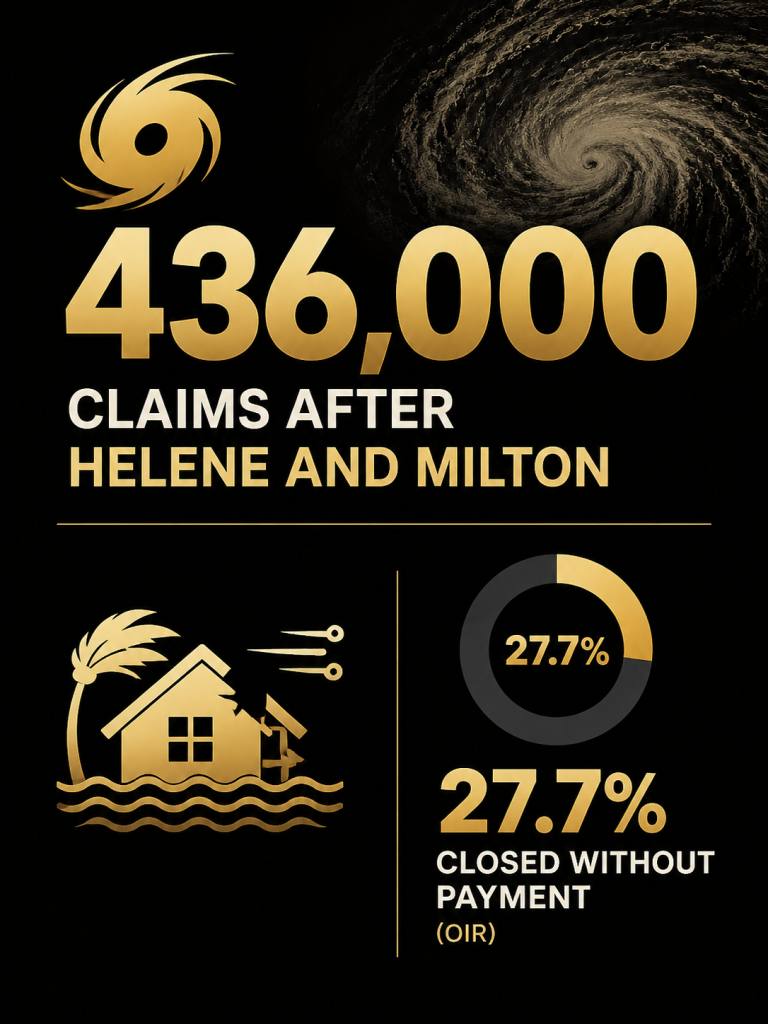
Southwest Florida has seen more than its share of storms, and the numbers show how often claims fall short. After Hurricanes Helene and Milton in 2024, Florida’s Office of Insurance Regulation (OIR) data show roughly 436,000 claims, and about 27.7% were closed without any payment. The most common reasons were damage that didn’t exceed the deductible, flood damage (which homeowners policies exclude), and claims withdrawn or abandoned.
Beyond denials, underpayment is the quieter problem. Common causes include:
- Wind versus flood. Storm surge is excluded from a standard homeowners policy, and insurers sometimes attribute mixed damage to flood.
- The hurricane deductible. Many Florida policies have a separate hurricane deductible, often a percentage of your dwelling coverage.
- A low scope of repair. The adjuster’s estimate leaves out line items, labor, or code-required work.
- Actual cash value holdbacks. The insurer pays depreciated value first and holds back the rest.
- Matching disputes. New materials don’t match the undamaged parts of your home.
- Late or incomplete documentation.
Where Do You Stand? Deadlines by Storm
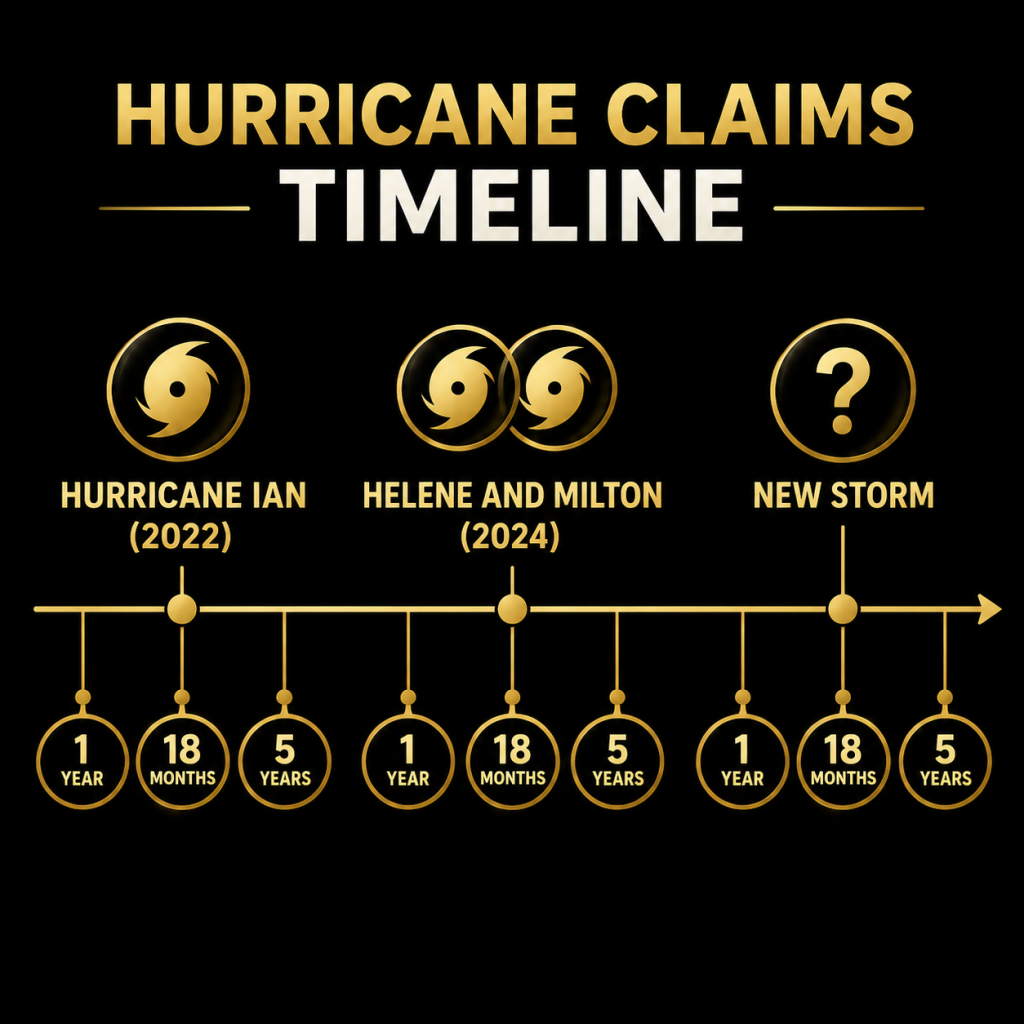
Florida’s deadlines are measured from the date of loss, and for a hurricane that is the date of landfall (§ 627.70132). That means the answer depends on your storm.
| Situation | What generally applies |
|---|---|
| A new storm | 1 year from landfall to report an initial or reopened claim, and 18 months for a supplemental claim (§ 627.70132). |
| Hurricane Milton (loss date Oct. 9, 2024) and Hurricane Helene (Sept. 26, 2024) | The 1-year window to report a new claim has passed, and the 18-month supplemental window has also passed. If you reported on time, you generally have 5 years from the date of loss to sue on a breach of the policy (§ 95.11(2)(e)), after the pre-suit notice process. |
| Hurricane Ian (Sept. 2022) and other older losses | Older rules may apply to notice and supplemental claims. Don’t assume. Ask a lawyer promptly. |
Two cautions:
- A claim you never reported on time can be barred.
- Waiting hurts even inside the deadline, because evidence, estimates, and memories fade.
Your Rights During the Claim: The Homeowner Claims Bill of Rights
Under § 627.7142, your insurer must give you a Homeowner Claims Bill of Rights within 14 days of your first communication about the claim. It summarizes the timeline:
- 7 days: acknowledgment that your claim was reported.
- 30 days: on written request, confirmation of full coverage, partial coverage, or denial, or a statement that the claim is still under investigation, measured from your completed proof-of-loss statement.
- 7 days: a copy of the insurer’s detailed estimate after its adjuster generates it.
- 60 days: full payment, payment of the undisputed portion, or a denial. If the insurer is late, interest runs from the date you filed (§ 627.70131).
- Free mediation of disputed claims through the Department of Financial Services in most circumstances.
Write down your date of first notice. Everything else is measured from it.
If Your Claim Was Denied
- Get it in writing. Ask for the specific policy provisions and facts the insurer relied on.
- Request your full policy and the adjuster’s report, photos, and estimate.
- Ask for a reinspection and bring your own contractor.
- Get an independent opinion on causation (wind vs. flood, age vs. storm damage).
- Don’t repair beyond what’s necessary until you’ve documented everything, but do make emergency repairs (tarps, board-up) and keep receipts.
- Use mediation (below), and consider a lawyer before signing anything.
If Your Claim Was Underpaid
Check these before you accept a check:
- ACV vs. replacement cost. For a dwelling, the insurer must first pay at least the actual cash value, minus your deductible, and then pay the remaining amount as repairs are performed (§ 627.7011). If your home is a total loss, replacement cost is generally owed without a depreciation holdback.
- Matching. If replaced items don’t match the originals in quality, color, or size, the insurer must make reasonable repairs or replacements in adjoining areas, subject to your policy language and some factors (§ 626.9744).
- Scope. Compare the insurer’s estimate line by line with a licensed contractor’s estimate. Missing items are the most common gap.
- “Full and final” language. A check marked that way, or a release you’re asked to sign, can end your right to ask for more.
Free Mediation, Appraisal, and Pre-Suit Notice: Your Options
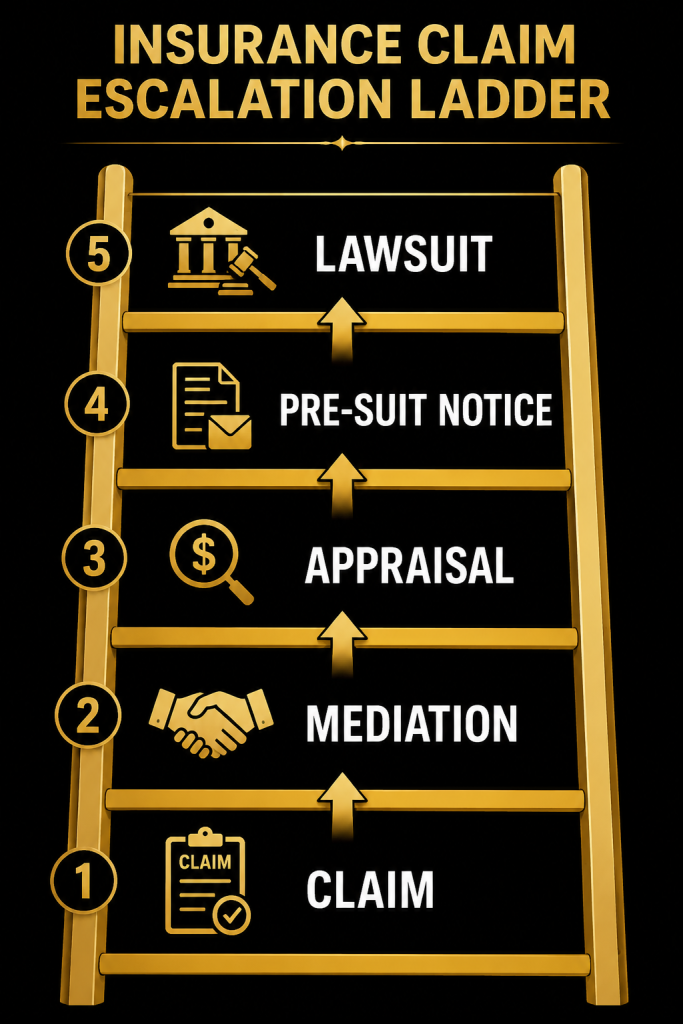
Think of this as a ladder, from least to most adversarial.
1. Free mediation (§ 627.7015).
- The Department of Financial Services runs a mediation program for disputed residential property claims.
- The insurer pays for the conferences, and the insurer’s representative must have authority to settle.
- It’s nonbinding, and after a written settlement you have 3 business days to rescind unless you’ve cashed the check.
- It doesn’t cover suspected fraud, disputes under $500, or claims that missed the § 627.70132 notice deadline.
2. Appraisal. Many policies include an appraisal clause for disputes over the amount of loss. If the insurer failed to notify you of your mediation rights, you may not have to go through appraisal before suing.
3. Pre-suit notice (§ 627.70152).
- Required at least 10 business days before filing a lawsuit, filed on the Department of Financial Services form.
- The insurer must respond in writing within 10 business days. After a denial, it can accept coverage, keep denying, or reinspect (14 business days).
- If the dispute isn’t resolved within 90 days after the notice period, you can sue without further notice. A suit filed without the notice can be dismissed.
4. Litigation, generally within the 5-year period for a timely-reported claim.
Public Adjuster or Attorney?
Both can help, but they do different jobs:
| Public adjuster | Attorney | |
|---|---|---|
| Focus | Documents and negotiates the claim amount | Legal rights, deadlines, and litigation |
| Fee limits | Capped at 10% of claim payments for events under a declared state of emergency (within one year), and 20% otherwise (§ 626.854) | Set by agreement, typically contingency |
| Legal advice | Not allowed to give it | Yes |
| Lawsuit | Can’t file one | Can |
If your dispute might head toward mediation, pre-suit notice, or court, bring in an attorney early.
What a Lawyer Costs: The Fee Reality
Here’s the part that matters for your wallet. Florida repealed its one-way attorney fee statutes for property insurance disputes (2022 and 2023), and § 627.70152 itself provides no fee-shifting. In plain terms, you generally can’t count on the insurance company paying your attorney if you win. Many lawyers handle property claims on a contingency basis, meaning a percentage of what’s recovered, so ask:
- What percentage, and on what amount (the total or only the added recovery)?
- Which costs will I owe, and when?
- Is the agreement in writing?
When to Call a Hurricane Damage Attorney
You don’t need a lawyer for a claim that’s paid promptly and fully. A homeowners insurance claim lawyer is worth a call when:
- Your claim was denied and the reason doesn’t match your damage
- The payment is far below a licensed contractor’s estimate
- The insurer missed the 60-day deadline or stopped responding
- You’re asked to sign a release or cash a “full and final” check
- You’re approaching a deadline
- The dispute is heading toward mediation, pre-suit notice, or litigation
If you’re searching for a Fort Myers property damage attorney or a hurricane damage attorney in Fort Myers, ask how the firm handles Southwest Florida claims. Demesmin & Dover represents Florida homeowners in insurance disputes from our Fort Lauderdale and Tampa offices.
FAQ
What can I do if my homeowners insurance claim was denied in Florida?
Ask for the denial in writing with the specific policy provisions, request your policy and the adjuster’s report, ask for a reinspection, use free Department of Financial Services mediation, and talk to a lawyer before suing.
How long do I have to file a hurricane claim in Florida?
One year from the date of loss (landfall) to report an initial or reopened claim, and 18 months for a supplemental claim (§ 627.70132).
How long do I have to sue my insurance company?
For breach of a property insurance contract, generally 5 years from the date of loss (§ 95.11(2)(e)), after a pre-suit notice.
What if my claim is underpaid?
Compare the estimate with a contractor’s, check ACV vs. replacement cost and matching rules, and don’t cash a “full and final” check without understanding the release.
Is mediation really free?
The insurer bears the cost of the mediation conferences (§ 627.7015). It’s nonbinding.
Can I get my attorney fees from the insurer if I win?
Generally no. Florida repealed the one-way attorney fee statutes. Ask any lawyer about fees in writing.
Should I hire a public adjuster or an attorney?
A public adjuster can document and negotiate the amount (fees are capped), but can’t give legal advice or sue. An attorney can do both.
Get Help From Demesmin & Dover
our insurer has a team. You should have one too. Demesmin & Dover represents Florida homeowners with denied and underpaid claims, and we’re available 24/7.
Call now: 866-954-MORE (6673) or Start your free case review.