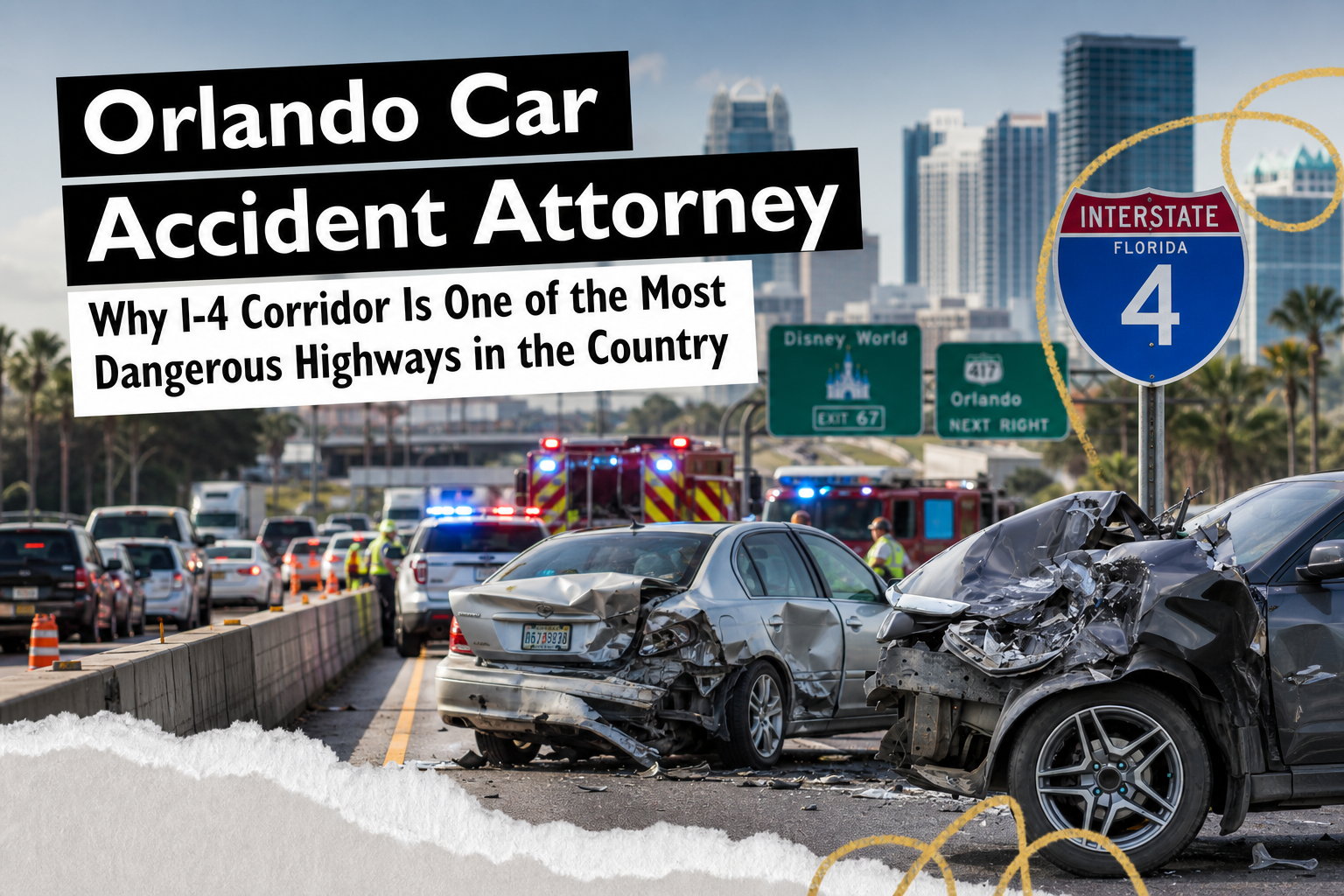
If you’ve driven I-4 through Orlando during rush hour, you already know something feels different about this stretch of road. It’s not just in your head. Multiple independent studies have looked at fatal crash data across the country and landed on the same conclusion. I-4 keeps showing up at or near the very top of the list.
That’s why here at Demesmin & Dover Law Firm, we believe in making things clear, this way you know exactly what you’re dealing with, especially if you or someone you love has been in a crash on this highway. As an Orlando car accident attorney firm, we see the aftermath of I-4 crashes regularly, and understanding why this road is so dangerous is the first step in understanding what a claim on it actually looks like.
Just How Dangerous Is I-4?
The numbers here aren’t close. I-4 doesn’t just rank among dangerous highways, it consistently ranks first.
The Data Behind the Reputation
A widely cited analysis by Teletrac Navman, a fleet and transportation data firm, ranked I-4’s 132-mile stretch between Tampa and Daytona Beach as the deadliest highway in the country when measured by fatalities per mile, the only highway in the study to cross a rate of one fatality per mile. A separate analysis by EverQuote, an online auto insurance marketplace, used federal crash data from the National Highway Traffic Safety Administration’s Fatality Analysis Reporting System and reached the same conclusion, naming I-4 the deadliest interstate in the country.
Orlando Is the Epicenter
Both studies point to the same detail. The deadliest section of I-4 sits right around Orlando, particularly the stretch between Lakeland and the theme park corridor. That’s not a coincidence. It’s the section of highway carrying the heaviest mix of daily commuters, long haul trucking, and out of town visitors all at once. More recent numbers help put this in context. Statewide, FLHSMV data reported in early 2026 showed over 358,000 crashes across Florida in 2025, with nearly 3,000 proving fatal.
Orange County itself, despite its high traffic volume, actually ranked among the safer half of Florida counties on a per-resident basis, which suggests it’s the sheer concentration of traffic on corridors like I-4, rather than reckless driving across the county as a whole, that’s driving this highway’s dangerous reputation. Orlando still averages nearly 72 car crashes a day and sees over 6,000 hit-and-run accidents each year, and local crash patterns also include pedestrian accidents in busy corridors and intersections.
Why Is This Stretch of Highway So Dangerous?
A few factors show up again and again when researchers try to explain why I-4 keeps topping these lists.
Heavy, Mixed Traffic
Orlando draws millions of visitors a year, and a large share of them end up driving unfamiliar rental cars on I-4 to reach the theme parks. Mixing tourists who don’t know the road with daily commuters who drive it twice a day creates exactly the kind of unpredictability that leads to serious crashes caused by negligent drivers.
Constant Construction
For years, I-4 through Orlando has been under some form of major construction. The Federal Highway Administration describes the I-4 Ultimate project as a 21-mile reconstruction of the corridor from west of Kirkman Road through downtown Orlando to east of State Road 434, involving four new express toll lanes, 15 rebuilt interchanges, and the reconstruction or replacement of 140 bridges. Even with that project largely complete, ongoing work under the Moving I-4 Forward program continues to bring lane shifts, reduced speeds, and shifting traffic patterns to the corridor west and east of Orlando.
Aging Infrastructure Meeting Modern Traffic Volume
Before the Ultimate project, the general purpose lanes on I-4 were roughly 50 years old and were never designed to carry the volume of traffic the corridor sees today. Even with rebuilt lanes now in place, the road continues to carry a level of daily traffic, over 200,000 vehicles through the Orlando segment, that puts constant strain on the system.
Weather and Visibility
Central Florida’s sudden afternoon thunderstorms are a routine part of daily driving, and heavy rain combined with high speed, high density traffic is a reliable recipe for multi vehicle crashes.
What Kinds of Crashes Happen Most on I-4?
Understanding the pattern of crashes on this highway helps explain why claims here can get complicated.
Rear end collisions, often tied to sudden slowdowns from construction zones or congestion
Multi vehicle pileups, especially during sudden rain or in areas with abrupt lane shifts
Side impact and merging crashes, common where lanes narrow or shift near construction zones and interchanges
Distracted driving crashes, frequently involving drivers unfamiliar with the road checking GPS directions or looking for exits
What to Do If You’re in an Accident on I-4
A crash on a highway like this comes with its own set of challenges, starting with the fact that pulling over safely isn’t always simple.
Get to a safe location if possible. Highway shoulders on I-4 can be narrow, especially through active construction zones, so move as far from traffic as you safely can.
Call 911 immediately. High speed highway crashes often involve multiple vehicles, and a police report becomes critical for sorting out what happened.
Exchange insurance information with the other driver when it is safe to do so.
Document the scene, including construction signage, lane markings, weather conditions, photos of the accident scene, and vehicle damages, since these details matter more on I-4 than on a typical city street.
Obtain a copy of your crash report as soon as possible.
Note whether you were in a construction zone. If a lane shift, missing signage, or unclear markings played a role, that can affect who bears responsibility for the crash.
Seek medical attention within 14 days, even if you feel fine, high speed impacts can cause injuries that aren’t immediately obvious.
Under Florida’s no-fault system, your own policy initially pays for your injuries through personal injury protection coverage; Florida requires $10,000 in this coverage, and it typically pays 80% of medical expenses and 60% of lost wages.
Do You Need an Attorney After an I-4 Accident?
Crashes on I-4 often involve multiple vehicles, construction zone liability questions, and sometimes out of state or rental car drivers who aren’t familiar with Florida’s roads or insurance rules. Sorting out fault and dealing with more than one insurance company at once is a lot more complicated than a routine fender bender on a side street.
Talk to an Orlando Car Accident Attorney Who Knows This Highway
I-4 isn’t just a busy road. The data consistently shows it’s one of the most dangerous stretches of highway in the entire country, and that reality shapes how these cases need to be handled.
As an experienced Orlando auto accident attorney firm, the team at Demesmin & Dover Law Firm understands the specific risks this corridor presents, with local knowledge of Orlando, FL and Central Florida roads and courts, and how to build a claim around them.
When choosing a personal injury lawyer, assess local expertise and experience handling similar motor vehicle accident cases.
Florida’s statute of limitations for a car accident lawsuit is generally two years, wrongful death claims also usually have a two-year deadline, and missing that deadline can bar your right to sue.
Communicating regularly with your attorney helps keep your legal claim on track. Contact Demesmin & Dover today for a free case evaluation; we handle cases on a contingency fee basis, so there are no upfront legal fees.