Ask three Illinois homeowners what “the homestead exemption” means and you’ll get three different answers. One thinks it lowers the property tax bill. One thinks it protects the house from creditors. One thinks it’s the box their accountant checks every spring. They’re all right, which is exactly why this topic is such a mess.
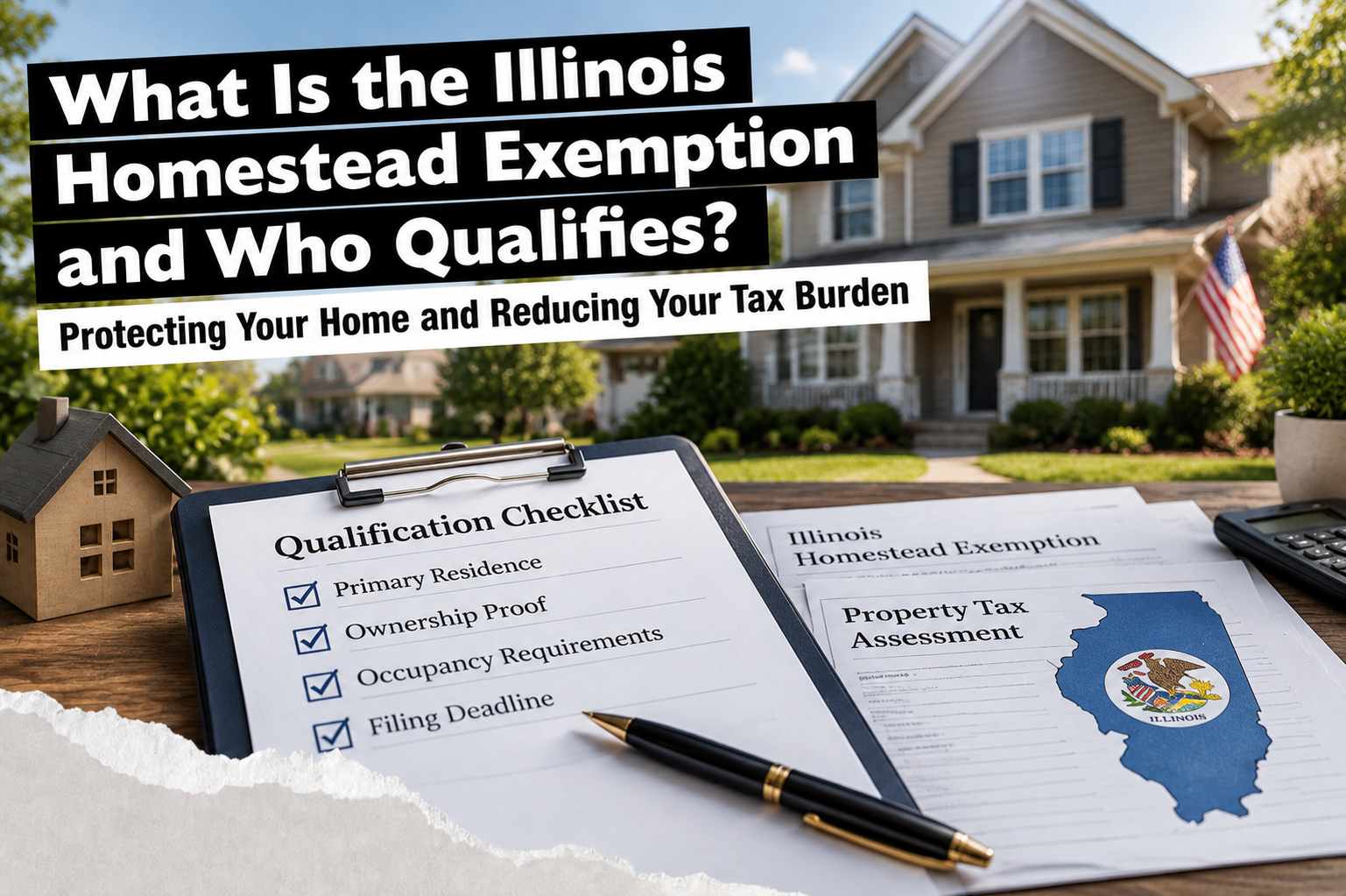
Quick Answer: The Illinois homestead exemption is two separate protections that share a name. The property taxexemptions reduce the taxable value of the home you own and live in, and the amounts depend on your county and your situation (for example, up to $10,000 for the General Homestead Exemption in Cook County, or $8,000 for seniors there). The creditor protection exemption shields your home equity from most creditors, and as of January 1, 2026 it covers up to $50,000 per owner, or $100,000 combined for two or more owners. To qualify, you generally need to own the home (or hold a legal or equitable interest), live in it as your primary residence, and be responsible for the property taxes.
That’s the short version. The long version is where estate planning and probate quietly come in.


Two Exemptions, One Confusing Name
Illinois uses the word “homestead” for two unrelated legal tools.
- Property tax homestead exemptions live in the Property Tax Code. They reduce your home’s Equalized Assessed Value (EAV), which is the number your tax bill is built on. Your county assessor handles them.
- The creditor protection homestead exemption lives in the Code of Civil Procedure (735 ILCS 5/12-901). It protects part of your home equity from judgments and, in bankruptcy, from creditors.
Most pages online pick one lane and ignore the other. That’s how people end up asking a bankruptcy site about their tax bill, or a tax site about a judgment. If you have a question about either, start by figuring out which exemption you’re actually talking about.
The Property Tax Homestead Exemptions, Amounts and Rules
These reduce the taxable value of your home, so the savings show up on your tax bill. The figures below come from the Illinois Department of Revenue‘s July 2025 exemption guide, and the amounts are maximums.
| Exemption | Who it’s for | Amount |
|---|---|---|
| General Homestead | Owner-occupants of a principal residence | Up to $10,000 EAV (Cook County), $8,000 (counties next to Cook), $6,000 (all others) |
| Senior Citizens | Owners age 65 or older | Up to $8,000 EAV (Cook and neighboring counties), $5,000 (all others) |
| Senior Citizens Assessment Freeze | Age 65 or older with limited household income | Freezes your EAV. Income limit is $65,000 for tax year 2025, then $75,000 for 2026, $77,000 for 2027, and $79,000 for 2028 and after. |
| Disabled Persons | Owners with a disability | $2,000 EAV reduction, renewed every year |
| Veterans with Disabilities | Service-connected disability | $2,500 (30% to under 50%), $5,000 (50% to under 70%), first $250,000 of EAV exempt (70% or more) |
| Returning Veterans | Veterans returning from active duty | $5,000 EAV reduction for two consecutive tax years |
| Home Improvement | Owners who add or rebuild | Up to $25,000 of added assessed value, for four years |
| Natural Disaster | Owners who rebuild after a declared disaster | Based on EAV before and after the rebuild |
A few things worth knowing:
- The General Homestead number is a cap, not a coupon. It’s the increase in your EAV above a 1977 base year, up to the county maximum.
- The Senior Freeze doesn’t lower your assessment. It stops it from rising, and you generally have to reapply every year.
- Some of these can’t be stacked. You can’t claim the disabled persons exemption and a veterans exemption in the same year, for example.
The Creditor Protection Exemption and the 2026 Jump to $50,000
Under 735 ILCS 5/12-901, your homestead is exempt from attachment, judgment, levy, or judgment sale for most debts, up to a dollar limit. For years that limit was $15,000, which barely covered a kitchen remodel in most Illinois markets.
That changed with Public Act 104-120, signed August 1, 2025 and effective January 1, 2026:
- $50,000 of protection for one individual
- $100,000 combined when two or more individuals own the property, split by each owner’s percentage of ownership
- It covers a house, condo, co-op, or farm or lot with buildings, as long as you live there
Two honest caveats. The exemption protects equity (what the home is worth minus what you owe), not the whole house. And it doesn’t erase a mortgage or a valid lien. If a page online still says $15,000, it’s out of date.
Who Qualifies for the Illinois Homestead Exemption?
The details vary by exemption, but the core test is the same across most of them.
- You own the home, or you hold a legal or equitable interest in it (a trust beneficiary or contract buyer, for example).
- It’s your principal residence, meaning where you actually live.
- You’re liable for the property taxes.
- You meet the age, income, disability, or veteran requirement for the specific exemption.
For the property tax exemptions, residency is usually measured on January 1 of the assessment year. Move in on January 2 and you may be waiting a year. The county assessor, not the state, processes the applications, so the paperwork and deadlines depend on where the home is.
How Your Estate Plan Can Quietly Change Your Eligibility
This is the part nobody puts in the exemption brochure. The exemptions depend on who owns the home and who lives in it, and estate planning moves both of those levers.
Adding a child to the deed
Parents often add an adult child to the deed “to avoid probate.” Sometimes that works. But it can also change who is treated as the owner, expose the home to the child’s creditors, and create questions about who is eligible for which exemption. It is not a free shortcut, and it’s hard to undo.
Moving the home into a trust
A revocable living trust is a common estate planning tool, and an owner who lives in the home can often keep exemptions after the transfer. Counties generally want proof. For instance, the Cook County Assessor accepts a trust agreement when the applicant isn’t on the recorded deed. Rules also differ by program: the Senior Citizen Real Estate Tax Deferral Program, for one, has stricter trust requirements. Check with your county before you retitle anything.
Dying without a plan
If there’s no will or trust, the home goes through probate and passes under Illinois’s default rules. That can leave heirs holding a property with no exemptions in place and no clear owner to claim them. A short conversation with an estate planning lawyer in Illinois now is cheaper than untangling this later.
What Happens to the Homestead When the Owner Dies
The two exemptions behave very differently after a death.
Creditor protection continues. Under 735 ILCS 5/12-902, the homestead exemption continues after the owner’s death for the benefit of the surviving spouse as long as they keep living there, and for the children until the youngest turns 18.
Property tax exemptions don’t automatically transfer. They depend on who owns and occupies the home on January 1, so an heir who moves in usually has to apply in their own name. Some programs have special rules for survivors. For example, an un-remarried surviving spouse of a qualifying disabled veteran may keep that veteran exemption.
The statute that protects the homestead also points to the Probate Act, which is one more reason this belongs on a probate attorney’s checklist, not a do-it-yourself pile.
What heirs should do:
- Don’t let the home sit vacant without telling someone. Occupancy matters for the protection.
- Keep paying the property taxes and the insurance.
- Ask the county assessor which exemptions end and which can continue.
- Talk to a probate attorney in Illinois before selling, retitling, or moving in.
How to Apply, and the Mistakes That Cost People Money
- Apply with the county. Cook County uses the Assessor’s Office. Other counties use the Supervisor of Assessments or Chief County Assessment Officer.
- Renew when required. The Senior Freeze and the Disabled Persons exemption generally need annual renewal, and a missed renewal can mean a lost year of savings.
- Bring documents. Deed, ID, proof of age, income records for the Freeze, and a trust agreement if you’re not on the deed.
- Don’t assume it carried over. After a deed change, a divorce, a death, or a move, check the next tax bill for the exemption line.
Most common mistakes: missing a renewal, assuming a new owner inherits the old owner’s exemption, retitling the home without checking exemptions, and relying on an old number from an old article.
When to Call a Probate Attorney or Estate Planning Lawyer in Illinois
You don’t need a lawyer to fill out a homeowner exemption form. Call one when:
- You’re thinking about adding someone to the deed, quitclaiming the home, or funding a trust
- A homeowner has died and the home is still titled in their name
- You inherited a home and aren’t sure what happens to the exemptions
- A creditor, judgment, or lien is in the picture and you want to know what’s protected
- Your estate plan is older than the 2026 change and was built around the $15,000 figure
- A senior or disabled family member needs exemptions set up correctly from the start

FAQ
What is the Illinois homestead exemption?
It’s two protections with one name. One reduces your property tax bill. The other protects up to $50,000 of home equity per owner from creditors as of January 1, 2026.
How much is the Illinois homestead exemption in 2026?
For creditor protection, $50,000 per individual and $100,000 combined for two or more owners. For property taxes, the General Homestead Exemption is up to $10,000 of EAV in Cook County, $8,000 in neighboring counties, and $6,000 elsewhere.
Who qualifies for the Illinois homestead exemption?
Generally the owner (or someone with a legal or equitable interest) who lives in the home as their principal residence and is responsible for the property taxes. Seniors, people with disabilities, and veterans may qualify for additional exemptions.
Does the homestead exemption protect my house in bankruptcy?
It protects home equity up to the exemption limit, not the whole home. It doesn’t erase a mortgage or a lien, and the new $50,000 limit applies to cases filed on or after January 1, 2026.
What happens to the homestead exemption when the owner dies?
The creditor protection continues for a surviving spouse who keeps living in the home and for the children until the youngest turns 18. Property tax exemptions generally don’t carry over automatically, so heirs need to apply in their own name.
Does putting my home in a trust affect the exemption?
It can. Many owners keep their exemptions after funding a revocable trust, but counties usually require documentation, and some programs have stricter trust rules. Confirm with your county first.
Is the homestead exemption automatic?
The property tax exemptions usually require an application, and some require yearly renewal. Confirm with your county assessor.
Get Help From Demesmin & Dover
A homestead question is rarely just a homestead question. It’s a deed question, a trust question, a family question, and sometimes a probate question. Demesmin & Dover represents Illinois families, and we’re available 24/7 because life doesn’t schedule itself around office hours.
Call now: 866-954-MORE (6673) or Start your free case review.