Florida has more registered boats than anywhere else in the country, which means more sunset cruises, more fishing trips, and more people getting genuinely hurt out there than most of us like to think about. If you’re reading this after a bad day on the water, here’s the fast version, then the full picture.
Quick Answer: A Florida boating accident claim seeks compensation from whoever’s negligence caused your injury, whether that’s the operator, the vessel owner, a rental company, or a charter business. Unlike a car accident, there’s no automatic no-fault insurance covering you, and most boat owners aren’t even required to carry liability coverage. You generally have two years to file under Florida law, or three years if federal maritime law applies. Florida also uses modified comparative negligence, meaning you can still recover if you’re less than 51% at fault.
That’s the summary. Now let’s talk about why boat accidents trip people up so much more than car accidents do.
Why Florida Has So Much Boating Traffic to Begin With
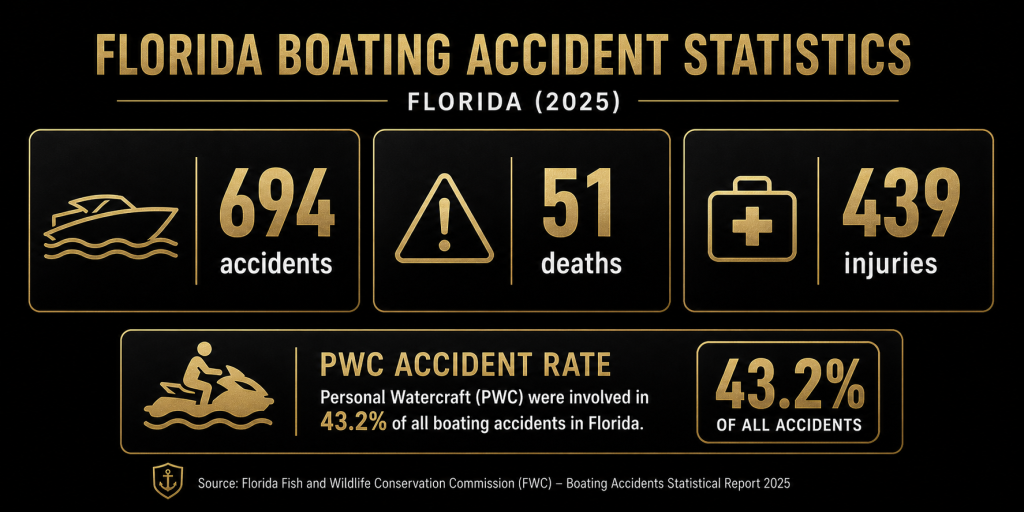
Florida recorded 694 reportable boating accidents in 2025, resulting in 51 fatalities and 439 injuries, according to the Florida Fish and Wildlife Conservation Commission’s own accident statistics. Personal watercraft made up just 17% of registered vessels but were involved in 23% of all reportable accidents, 161 PWC accidents in a single year. Alcohol or drugs played a role in roughly 14% of fatal accidents, and drowning, mostly among people not wearing a life jacket, was the leading cause of death.
None of that is a coincidence. It’s what happens when a lot of powerful machinery gets operated on crowded water by people who, as you’re about to find out, often didn’t need to prove they knew what they were doing before they got behind the wheel.
Why a Boat Accident Doesn’t Play by Car Accident Rules
If your only frame of reference is a fender bender, forget most of it. Boats are governed by a completely different rulebook.
No PIP on the Water
Florida’s no-fault insurance system covers motor vehicles. It stops at the boat ramp. There’s no automatic $10,000 in medical coverage waiting for you the way there is after a car accident, which means your own health insurance is usually the first one picking up the tab, at least for now.
No Mandatory Liability Insurance
Every registered car in Florida carries required coverage. Recreational boats don’t. Plenty of owners carry good insurance voluntarily. Plenty carry nothing at all, which is exactly why figuring out every possible party who can be held responsible matters so much in these cases.
A Shorter Clock Than You’d Think
Florida’s general negligence statute of limitations is two years. But if your accident happened on “navigable waters,” federal maritime law may apply instead, which carries a three-year window. Which one governs your case depends on where the accident happened and what kind of vessel was involved, and it’s not something to guess at. Assuming you have three years when you actually have two is how a valid claim quietly dies.
Who Can Be Held Liable After a Florida Boating Accident
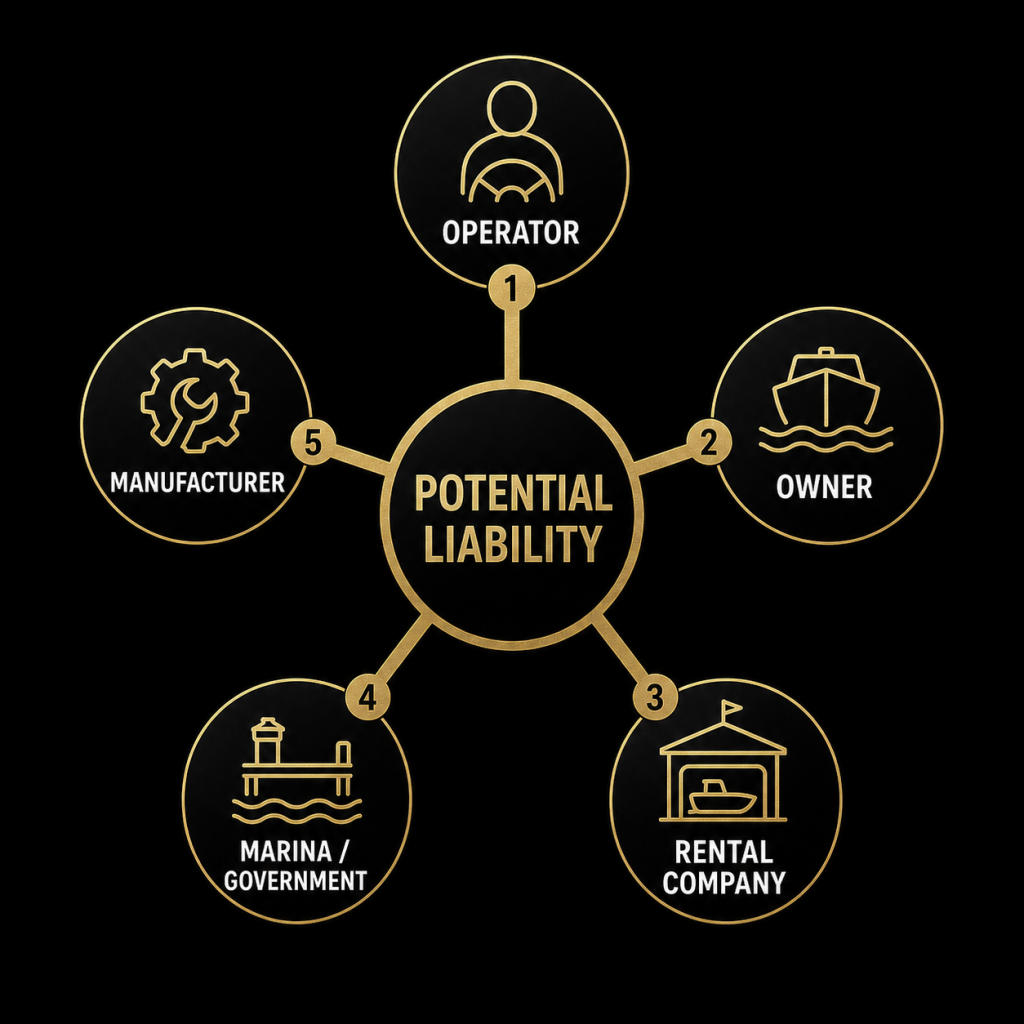
Liability rarely stops at “whoever was driving.” Here’s who else can end up on the hook.
The Operator
Florida law makes reckless or careless operation of a vessel illegal, and it comes with real teeth. Speeding through a no-wake zone, overloading the boat, running without proper lighting at night, or operating under the influence can all establish liability for the injuries that followed.
The Vessel Owner (Negligent Entrustment)
You don’t have to be driving to be responsible. Handing your boat’s keys to someone with no experience, no training, or a known history of reckless behavior can make you liable directly, even if you were sitting on the dock the whole time.
Rental Companies and Charter Operators
A rental livery has to verify that a renter is actually qualified to operate the vessel and provide required instruction before sending them off. A charter or tour company running paid trips owes its passengers a real duty of care and typically carries meaningful commercial insurance, which often makes these some of the stronger cases in terms of what’s actually recoverable.
Marinas, Docks, and Government Entities
Not every injury involves a collision between two boats. Rotted dock boards, unlit pilings, and unsafe boat ramps hurt people too. Claims against a government entity come with their own strict notice requirements and shortened windows, so these can’t sit on the back burner.
Manufacturers and Repair Shops
Steering failures, throttle defects, and fuel system malfunctions happen. When a mechanical failure caused the crash, the manufacturer or whoever last serviced the boat may share responsibility.
The Undertrained Operator Problem
Here’s something that surprises almost everyone the first time they hear it: Florida doesn’t require a boating license for most adults. If you were born before January 1, 1988, you can legally operate a boat with zero training, zero test, and zero card, ever. Only operators born after that date need a boater education ID card.
Which means a huge share of people driving boats in Florida on any given weekend have never had to prove they understand right-of-way rules, no-wake zones, or how to safely operate around swimmers and other vessels. That’s not a knock on any individual boater. It’s a structural gap in the law, and it’s precisely the kind of gap that supports a negligent entrustment or negligence claim when an undertrained operator hurts someone. If the person driving the boat that hit you had never taken a single safety course, that fact matters to your case.
Towed Watersports Injuries: Tubing, Wakeboarding, and Skiing
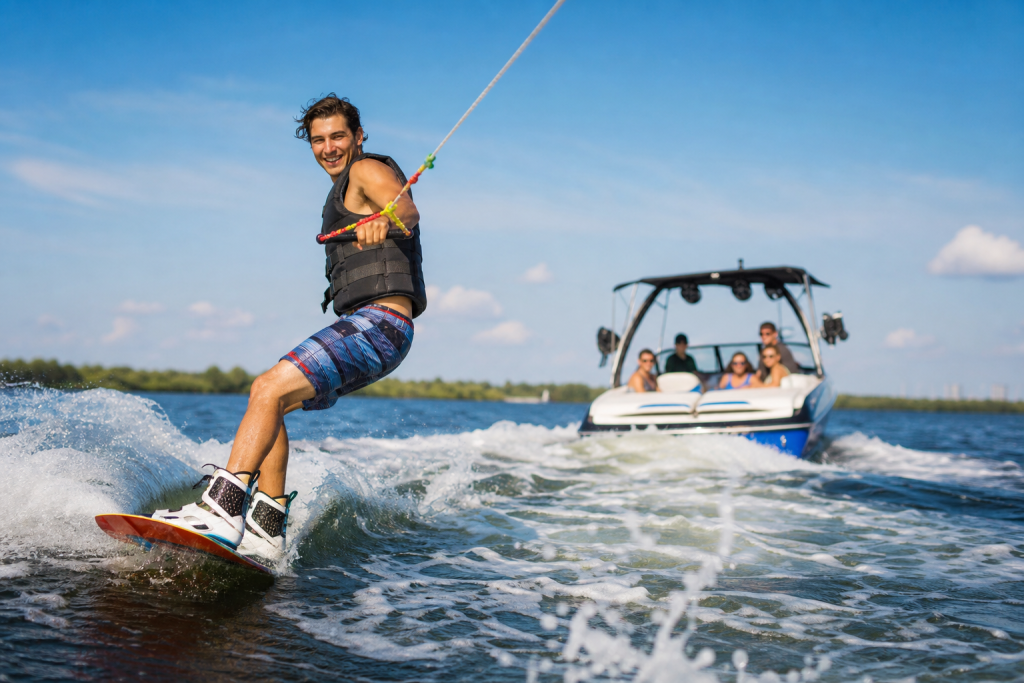
A huge number of real-world boating injuries have nothing to do with two boats colliding. They happen at the end of a tow rope.
Common scenarios include:
- A tuber thrown at high speed into another boat’s wake, a dock, or a fixed object
- A wakeboarder or skier struck by the boat’s propeller after a fall
- A driver who takes their eyes off the rider (or has no designated spotter watching at all)
- Overcrowded tubes or ropes rated for less weight than they’re carrying
Florida law requires a boat towing a person on skis, a tube, or a wakeboard to either have an observer on board or use a wide-angle rearview mirror, and it requires the towed person to wear a life jacket. When a driver skips the spotter, ignores other traffic, or keeps towing after a rider falls in a dangerous spot, that’s negligence, and it’s a claim that looks a lot more like a car accident case than most people realize once you break it down.
Comparative Negligence: Can You Recover If You Were Partly at Fault?
Florida uses modified comparative negligence under Fla. Stat. § 768.81. If you’re found more than 50% at fault for your own accident, you recover nothing. Below that threshold, your recovery is reduced by your percentage of fault, but you can still recover.
Example: if you’re found 20% at fault for standing up while the boat was underway, and your total damages are $100,000, you’d still be entitled to $80,000. Insurance companies know this rule well, which is exactly why they routinely try to shift blame onto the injured person. Having your version of events documented early matters more than most people expect.
Lucy’s Law and Why Criminal Conduct Still Shapes a Civil Case
Lucy’s Law (HB 289) took effect July 1, 2025, named for Lucy Fernandez, a 17-year-old killed when the boat she was riding on struck a channel marker in Biscayne Bay in 2022. The law tiered penalties for leaving the scene of a boating accident based on severity: a second-degree misdemeanor for property damage only, up to a first-degree felony with a mandatory minimum prison term when the accident results in death.
Here’s why a criminal statute matters to your civil claim, even though the penalties themselves are separate. When an operator flees the scene, refuses testing, or lies to investigators, that conduct becomes part of the official record, and it’s the kind of evidence that shapes how an insurance company values, or fights, your case.
What to Do in the First 24 to 72 Hours
Boats get repaired, repainted, and sold far faster than cars do. Evidence disappears quickly, so speed matters here more than almost any other injury case.
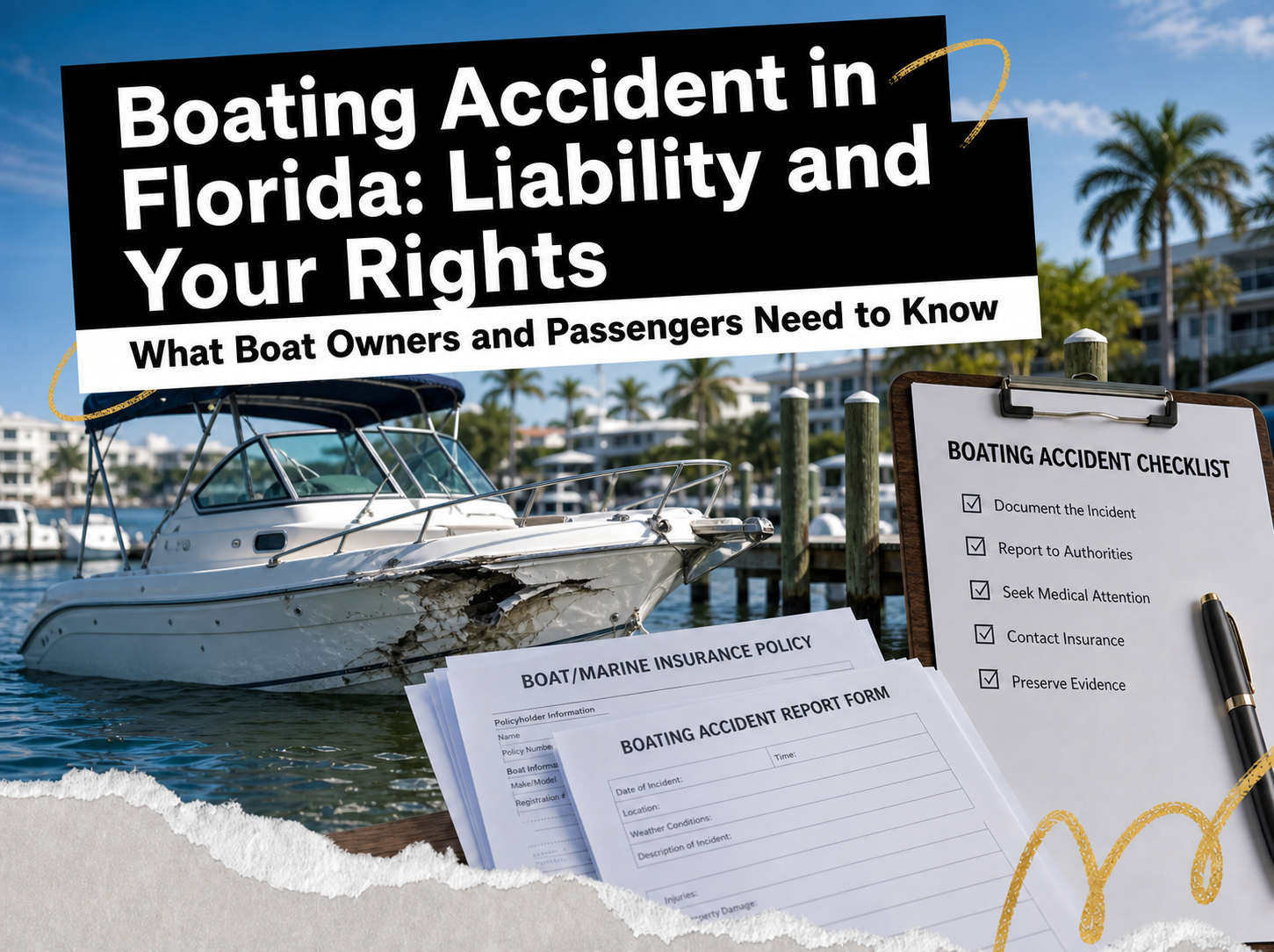
- Get medical attention immediately, even if you feel okay. Adrenaline and cold water mask real injuries.
- Confirm the accident was reported. Florida law requires operators to report accidents involving injury, death, or significant property damage to FWC or local law enforcement. Don’t assume someone else did it.
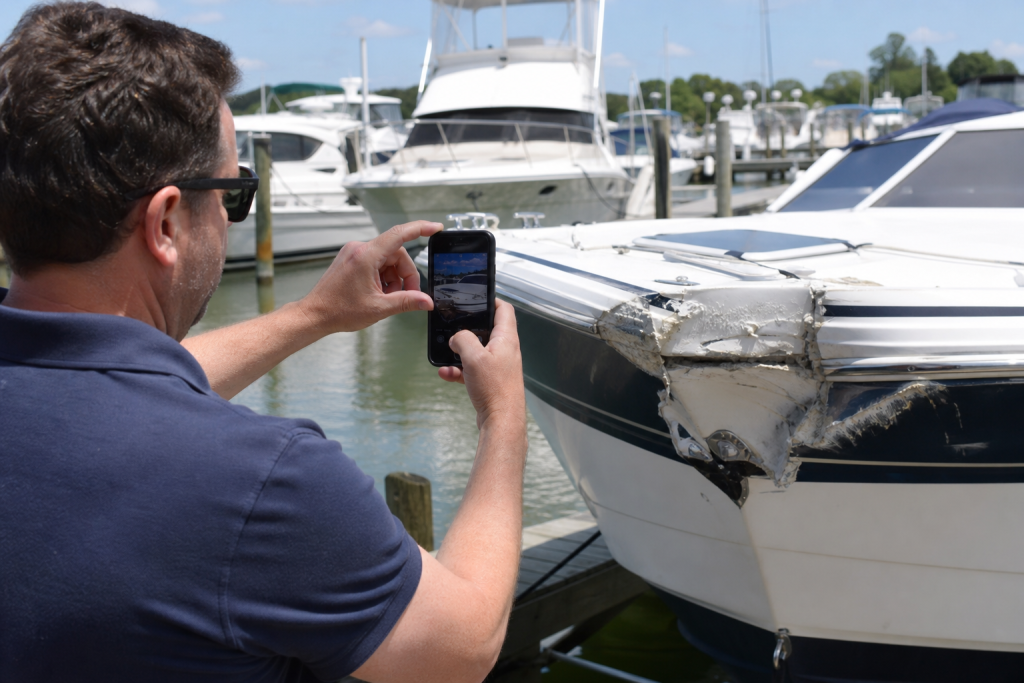
- Photograph the vessel before it leaves the water, hull damage, the throttle position, seating layout, safety equipment, and registration numbers.
- Get names and contact information for everyone on board. Passengers scatter after a boating accident in a way they don’t after a car crash.
- Find out if the boat was rented, chartered, or borrowed, and request a copy of the rental or charter agreement before you leave the dock.
- Preserve every photo and video from the trip. Ask people not to delete anything, today, not next week.
- Avoid giving a recorded statement to any insurance company, including your own health insurer, before speaking with an attorney.
What Happens to Your Settlement: Health Insurance and Medicare Liens
This part rarely gets explained, and it should. Since PIP doesn’t apply to boats, your own health insurance is usually the one paying your medical bills while your claim is pending. That help isn’t free.
Most health insurance plans, and Medicare in particular, have a right to be reimbursed out of any settlement or verdict you eventually recover, through what’s called subrogation. In plain terms: if your insurer paid $30,000 in medical bills and you later settle your claim, part of that settlement may be owed back to the insurer before you see a dime.
This is normal and it’s manageable, but it needs to be accounted for from the start, not discovered as a surprise the week your settlement check arrives. Liens can often be negotiated down, but only if someone is actually handling that piece of the case.
FAQ
Does Florida require boat owners to carry insurance?
No. Florida doesn’t require most recreational boat owners to carry liability insurance, unlike registered motor vehicles. Commercial operators, charter companies, and financed vessels often have coverage requirements of their own.
How long do I have to file a boating accident claim in Florida?
Generally two years under Florida’s negligence statute of limitations. If federal maritime law applies because the accident happened on navigable waters, the window is generally three years. Confirm which one applies with an attorney rather than assuming.
Do I need a boating license to legally operate a boat in Florida?
Not necessarily. Anyone born before January 1, 1988 can operate a vessel with no boater education requirement at all. Only those born on or after that date need a boater education ID card.
Can I still recover damages if I was partly at fault?
Yes, as long as you’re found 50% or less at fault. Florida’s modified comparative negligence rule reduces your recovery by your percentage of fault, but doesn’t eliminate it unless you cross the 51% threshold.
What if the boat that hit me had no insurance?
Liability can still extend to the vessel owner (if they weren’t driving), a rental company, or a charter operator, any of whom may carry coverage even if the operator personally doesn’t.
Is a tubing or wakeboarding injury covered under a boating accident claim?
Yes. If the driver failed to have a spotter, ignored safety rules, or operated carelessly while towing you, that’s a standard negligence claim, the same legal framework as any other boating accident.
What if the operator was a friend or family member?
Claims like this are made against an insurance policy, not against your friend’s personal savings. Most clients find this easier to move forward with once they understand that distinction.
Will my health insurance take part of my settlement?
Often yes, through subrogation. Your insurer or Medicare may have a right to be reimbursed for medical bills they paid, which is a piece of the case that should be handled early, not after you’ve already settled.
Get Help From Demesmin & Dover
Boating accidents don’t come with the safety net people assume they do, no automatic insurance, no guaranteed coverage on the other boat, and evidence that disappears faster than you’d think. Demesmin & Dover represents boating accident victims across Florida, and we’re available 24/7 because these accidents don’t exactly wait for a convenient Monday.
Call now: 866-954-MORE (6673) or Start your free case review.