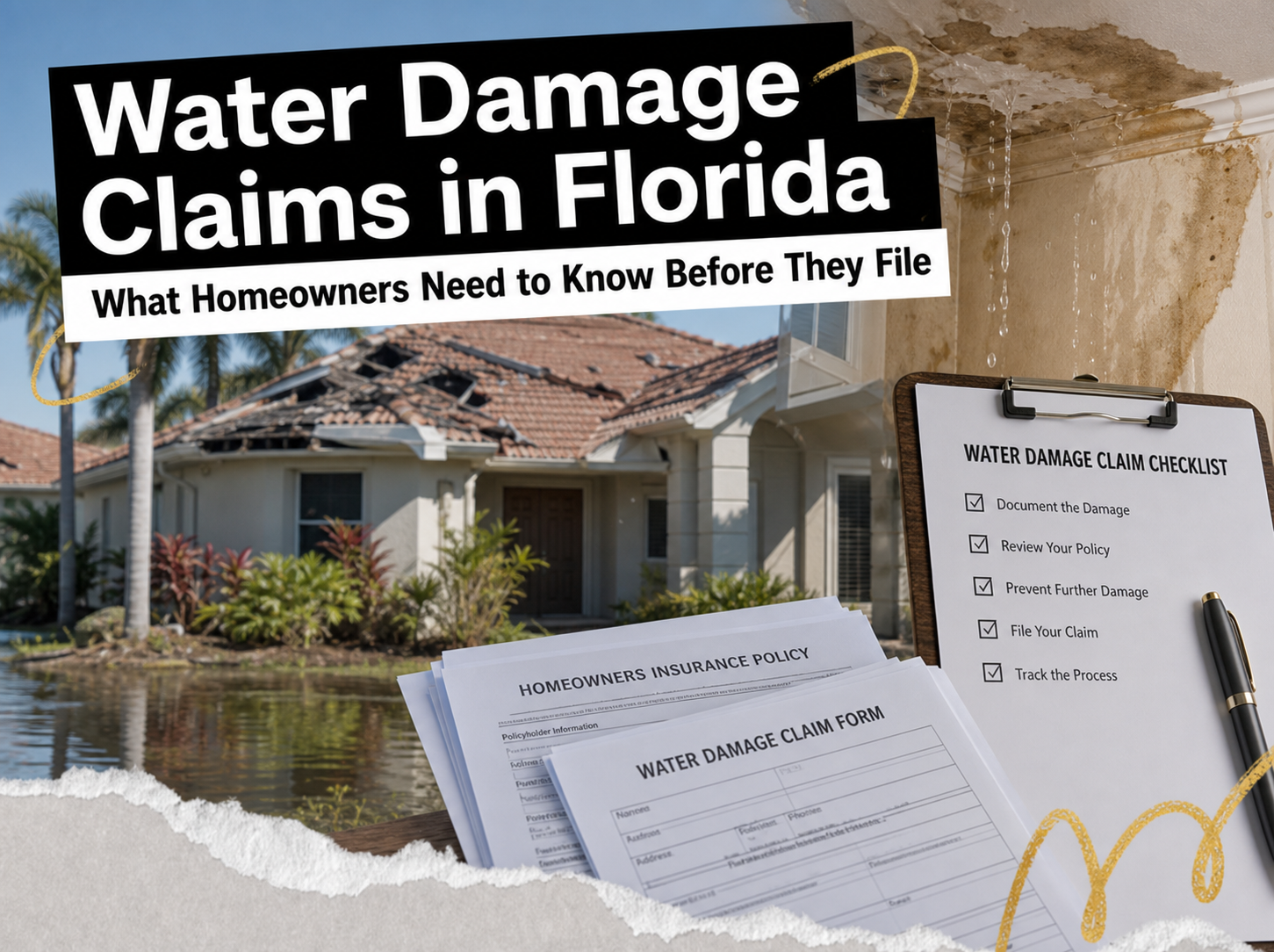
If a hurricane, a burst pipe, or a rogue washing machine hose has turned your living room into a splash pad, you’re probably reading this one-handed while the other hand holds a mop. Fair. Here’s the short version first, then the full breakdown for when you’ve got two hands free.
Quick Answer: A water damage claim is a request to your homeowners insurer to pay for repairs after water enters your home from a covered, sudden event, like a burst pipe, storm-created roof opening, or appliance failure. Florida law gives you one year to report the initial claim and 18 months for a supplemental claim, and your insurer has 60 days to pay or deny it once notified. Flood damage (rising water, storm surge) is excluded from a standard policy and requires separate flood insurance.
That’s the elevator pitch. Now let’s get into what actually decides whether you get a check or a form letter.
Why This Matters More in Florida Than Almost Anywhere Else
Florida doesn’t really do “gentle drizzle.” We do hurricanes, we do year-round humidity, and we do plumbing that’s so old a plumber can only guess when it was installed. So it tracks that water damage is one of the most common (and most fought-over) claims in the state.
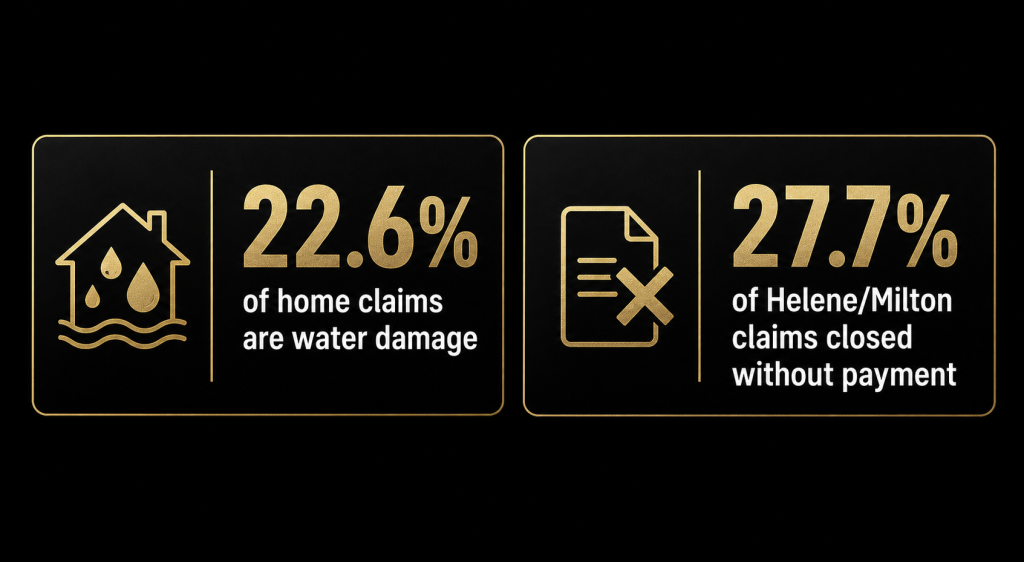
According to the Insurance Information Institute, water damage and freezing accounted for roughly 22.6% of all homeowners insurance claims nationally, with an average claim cost exceeding $15,000. That’s not a rounding error, that’s a whole category insurers budget entire departments around.
It gets more real after a named storm. The Florida Office of Insurance Regulation recorded more than 436,000 claims filed after Hurricanes Helene and Milton in 2024, and 27.7% of those closed without a single dollar paid out. That means roughly one in four Florida families who filed after those storms got a denial letter instead of a repair check, often because the damage got quietly relabeled as “flood” instead of wind or storm damage.
What Your Florida Homeowners Policy Actually Covers
Most Florida homeowners carry an HO-3 policy, and the entire fight usually comes down to two words: “sudden and accidental.” Everything below is really just a long explanation of that phrase.
Covered scenarios generally include:
- A pipe that bursts without warning (rude, but covered)
- A water heater that ruptures
- A washing machine or dishwasher hose that fails mid-cycle
- Toilet, tub, or sink overflow
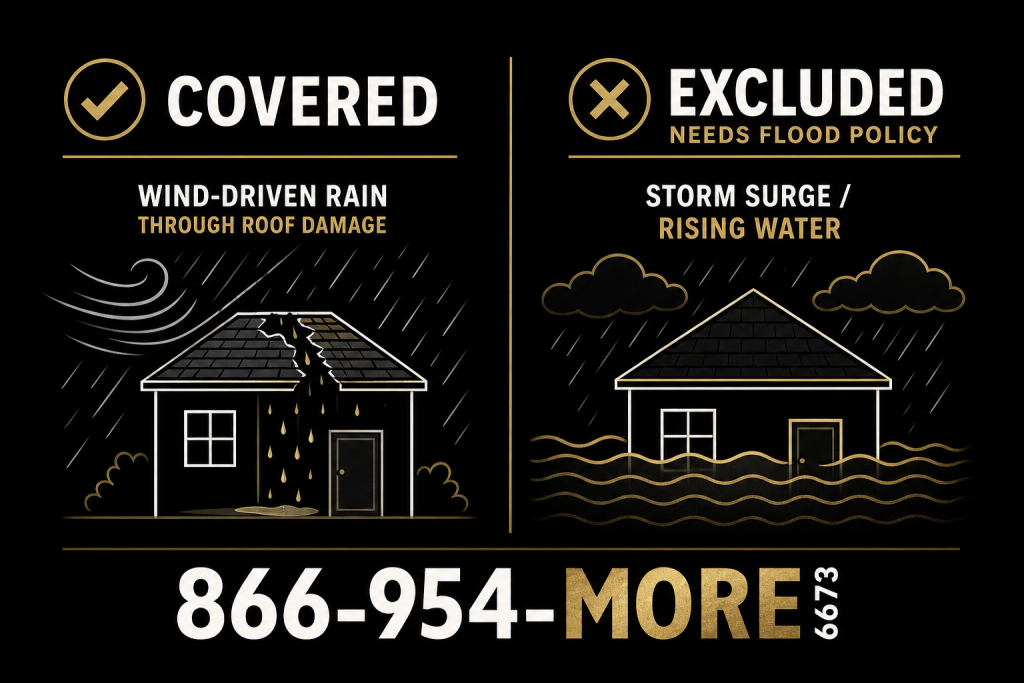
- Rainwater entering through a roof opening created by wind or hail during a storm
What’s typically excluded:
- Gradual damage. A pipe that’s been quietly weeping behind a wall for six months isn’t “sudden,” it’s a slow leak with a head start on your insurance company’s denial letter.
- Flood. Rising water from storm surge, overflowing canals, or saturated ground is a flood loss, not a homeowners claim. That needs an NFIP or private flood policy.
- Sewer and drain backups. Usually excluded unless you added a specific endorsement, which typically caps around $5,000 to $10,000.
- Deferred maintenance. The roof you’d “get to eventually” is now Exhibit A in your denial.
Some insurers also quietly cap water damage payouts at $10,000 on older homes, regardless of what repairs actually cost. Check your declarations page before you assume you’re fully covered. If you’re not sure which bucket your damage falls into, that’s exactly what our homeowners insurance claims team sorts out in a free case review.
Water Damage vs. Flood Damage: The Fight Insurers Pick After a Hurricane
Here’s the distinction almost nobody explains clearly, and it’s the one that quietly decides whether your hurricane claim gets paid.
Wind-driven rain that pours in through a hole your roof lost mid-storm is a covered water damage claim under your windstorm coverage. Storm surge or rising floodwater that walks in through your front door is a flood loss, excluded from your homeowners policy entirely.
The catch is that after a major storm, both can happen to the same house on the same night, and by the time it’s soaked into your drywall, it all looks identical. Insurers know this too. It’s a common move for an adjuster to label ambiguous interior water damage as “flood” specifically because it moves the loss off their books and onto a flood policy you may not even carry.
This got enough attention that the Florida Office of Insurance Regulation issued guidance in 2025 requiring insurers to properly evaluate claims involving both wind and water damage instead of defaulting to a flood label because it’s convenient. So if your denial letter says “flood exclusion” after a hurricane, that’s not necessarily the final word. It’s worth having someone independently reconstruct how the water actually got in.
The Florida Claim Deadline Clock
Florida law puts a countdown clock on both you and your insurer. Think of it less like fine print and more like a scoreboard you’re allowed to check.
Your deadlines (Florida Statute 627.70132):
- 1 year from the date of loss to report an initial or reopened claim
- 18 months from the date of loss to file a supplemental claim (for damage discovered later, like the mold that showed up as an uninvited houseguest three months after the storm)
Your insurer’s deadlines (Florida Statute 627.70131):
- 7 calendar days to acknowledge your claim
- 30 days to complete a physical inspection after you submit proof of loss
- 60 days to pay, partially pay, or deny your claim, or interest starts accruing on what’s owed
If day 60 comes and goes with no payment and no denial letter, that’s not just annoying, that’s your insurer missing a legal deadline. Write down the date you first reported the claim. Everything else gets measured from there, and now you know exactly when to start asking pointed questions.
What to Do the Moment You Find Water Damage
The next 24 to 72 hours do more for your claim than anything that happens afterward.
- Stop the source if it’s safe. Shut off the main water valve or the fixture supply line. Do not go full action-hero near standing water and an outlet.
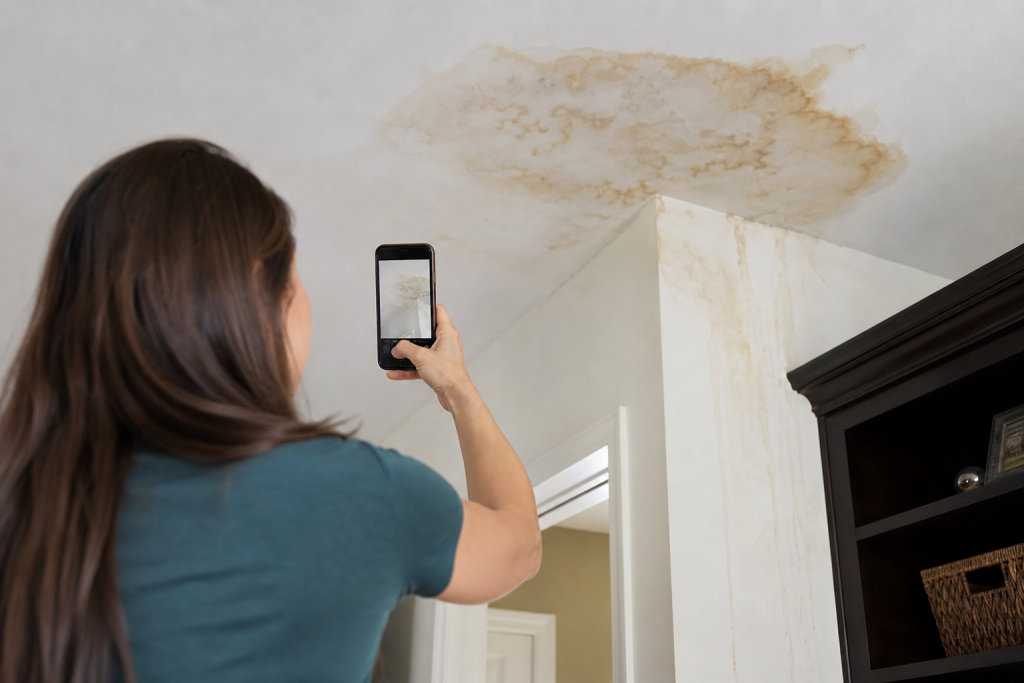
- Document before you touch anything. Photograph and video every affected room, wide shots and close-ups, including the water source if you can find it.
- Report the loss to your insurer immediately. This starts the statutory clock above. Get the claim number and your adjuster’s name.
- Begin emergency mitigation. Hire a licensed water restoration company that follows IICRC S500 drying standards. Keep every receipt, mitigation costs are generally reimbursable.
- Hold off on permanent repairs. The insurer needs to inspect first, but don’t delay the drying and mitigation part while you wait for them.
Repairing While Your Claim Is Open: Contractors, AOB, and Public Adjusters
This is where a lot of Florida homeowners get tripped up after the water itself is finally gone.
Be careful with Assignment of Benefits (AOB) contracts. Some restoration companies will ask you to sign over your right to collect insurance payments directly to them, in exchange for starting the work now. It can speed things up, but it also hands over the steering wheel on your claim. Read what you’re signing. If someone’s rushing you to sign an AOB before you’ve even called your insurer, that’s your cue to slow down, not speed up.
Public adjusters work for you, not the insurance company, and they typically take a percentage of the settlement. Useful for building a damage estimate. Not the right tool if a denial turns into an actual legal fight, since they’re not attorneys.
An attorney becomes relevant when:
- Your claim was denied and the “gradual damage” or “flood exclusion” explanation doesn’t match what actually happened
- Your insurer blew past the 60-day pay-or-deny deadline
- The settlement offered isn’t in the same zip code as your actual repair estimates
- You’re being asked to sign something you don’t fully understand, AOB or settlement release included
Not every claim needs a lawyer. If your insurer pays promptly and fairly, genuinely, go enjoy your dry house. But if you’re being slow-walked or lowballed while your home sits damaged, that’s a different situation, and it’s the one we handle every day for Florida and Illinois homeowners.
Why Florida Insurers Deny or Underpay Water Damage Claims
Knowing the playbook makes it a lot easier to spot when it’s being run on you.
- Gradual damage reclassification. Mold or staining shows up, and suddenly the insurer’s theory is that your “sudden” leak has secretly been going on for months.
- Maintenance exclusions. An aging water heater becomes “your fault” in the denial letter.
- Flood miscategorization. Covered above, this is the most common post-hurricane move.
- Lowball estimates. The claim gets acknowledged, then the estimate quietly leaves out structural drying, mold remediation, or materials damaged behind walls and floors.
Mold, Hidden Damage, and Coverage Sublimits
Mold moves fast in Florida, it can start growing within 24 to 48 hours, which is basically overnight shipping for a problem you didn’t order. If it results directly from a covered water event and you report it promptly, it’s typically covered, but most Florida policies cap mold remediation at $10,000, which doesn’t stretch far for a serious infestation.
Insurers also use mold against you: widespread growth behind walls can become their “evidence” that the leak was gradual, not sudden. Which is exactly why fast documentation and professional mitigation matter. The sooner you report and dry things out, the harder it is for anyone to argue the problem had been quietly brewing for weeks.
Your Options If the Claim Is Denied, Delayed, or Underpaid
You’ve got more leverage here than most homeowners assume.
- Request a reinspection and bring your own independent contractor estimates.
- File a mediation request through the Florida Department of Financial Services, available for many residential property disputes.
- Invoke the appraisal clause if the disagreement is purely about the dollar amount, not whether it’s covered.
- File a complaint with DFS Consumer Services if your insurer is ignoring statutory deadlines.
- Talk to an attorney before signing any settlement release, especially if the number doesn’t match your actual repair costs.
FAQ
How long do I have to file a water damage claim in Florida?
One year from the date of loss for an initial claim, 18 months for a supplemental claim involving additional damage from the same event.
Does homeowners insurance cover water damage from a hurricane?
Depends on the source. Wind-driven rain through storm-created openings is typically covered. Storm surge and flooding are not, and need separate flood insurance.
Why did my insurer deny my water damage claim?
Usually one of three things: a “gradual damage” classification, a maintenance exclusion, or reclassifying the loss as flood damage instead of wind or storm damage.
What if my insurer misses the 60-day deadline?
Under Florida Statute 627.70131, your insurer must pay or deny your claim within 60 days of notice. Missing it can entitle you to interest on the amount owed, and may support an argument that they’re not acting in good faith.
Do I need a lawyer for a water damage claim?
Not always. If your insurer pays promptly and fairly, probably not. If you’ve been denied, delayed past 60 days, or lowballed, it’s worth having someone check whether you’re being treated fairly under Florida law.
Get Help From Demesmin & Dover
f your water damage claim was denied, delayed past the statutory deadline, or settled for way less than repairs actually cost, you don’t have to just accept the number on the letter. Demesmin & Dover represents homeowners across Florida and Illinois in disputes with insurance companies, and we’re around 24/7, because water damage has a bad habit of not waiting for business hours.
Call now at 866-954-MORE (6673) or Start your free case review.