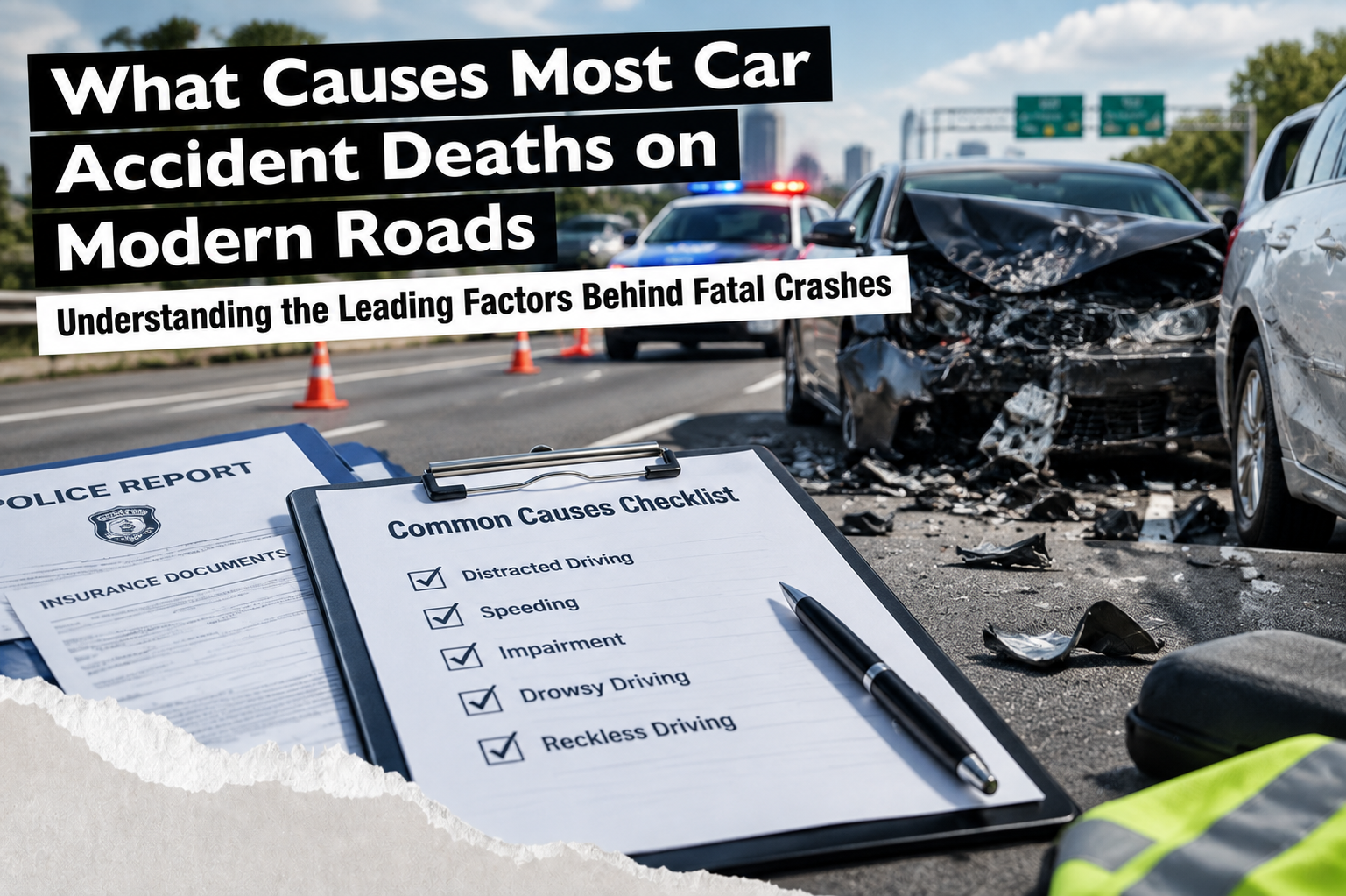
What Causes Most Car Accident Deaths on Modern Roads
Cars have never had more safety tech crammed into them, backup cameras, automatic braking, a dashboard that basically apologizes if you drift out of your lane. And yet people are still dying on the road in numbers that would shock most drivers. Here’s the short version of why, then the full picture.
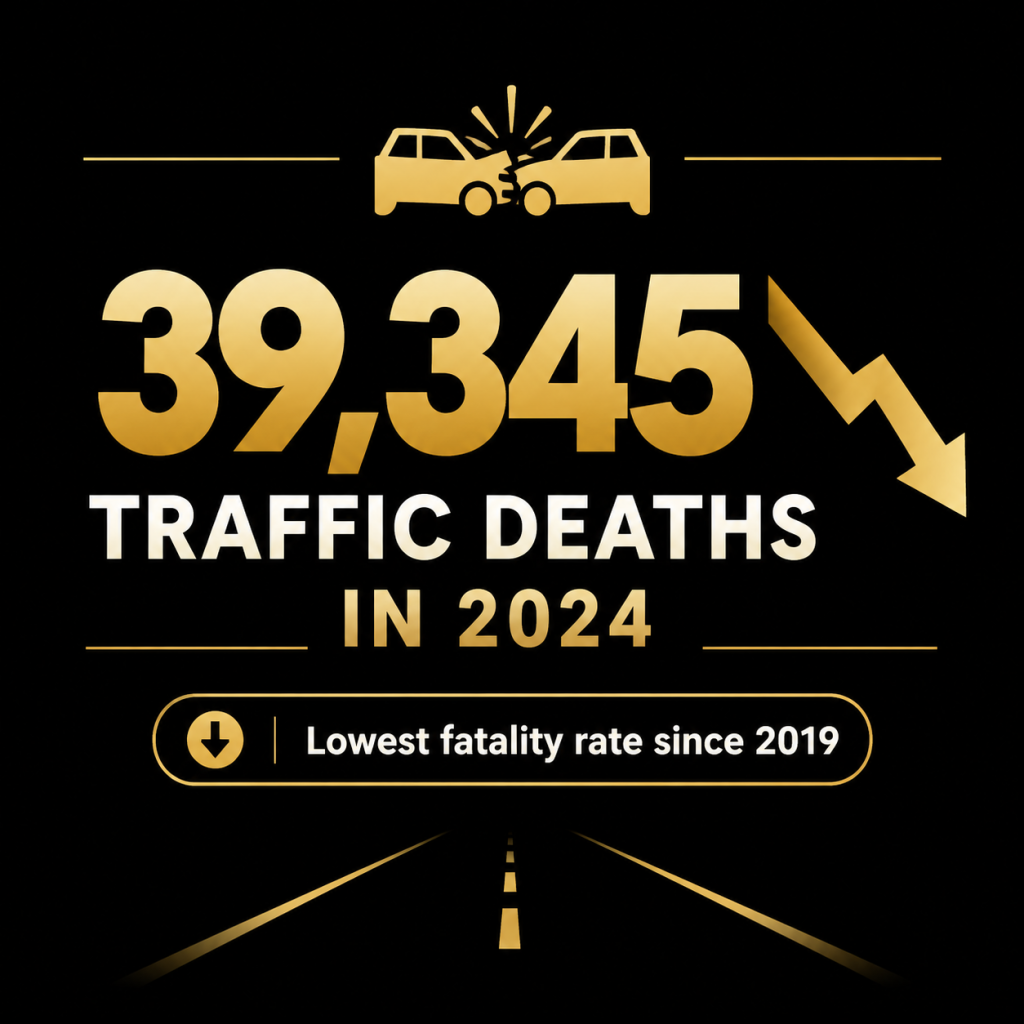
Quick Answer: The leading causes of fatal car accidents in the United States are speeding, alcohol and drug impairment, distracted driving, and failure to wear a seatbelt, together responsible for the large majority of the 39,345 traffic deaths recorded in 2024. What’s changed on modern roads isn’t the list, it’s the mix: overall driver deaths are falling thanks to safety technology, while pedestrian and cyclist deaths are rising sharply, largely tied to the growing size and shape of today’s vehicles.
That’s the summary. Here’s what’s actually driving those numbers.
The Good News First, Sort Of
In 2024, an estimated 39,345 people died in traffic crashes nationwide, according to NHTSA, down 3.8% from 40,901 in 2023 and the first time deaths dropped below 40,000 since 2020. The fatality rate fell to 1.20 deaths per 100 million miles traveled, the lowest since 2019. That’s real progress, and it’s worth acknowledging before anyone assumes the roads are only getting worse.
They’re not getting worse for everyone equally, though. Which is where this gets more interesting than a headline number.
The Big Four: What NHTSA’s Own Data Actually Shows
Strip away the noise and four factors do most of the damage, and they overlap constantly. The same crash often involves more than one.
Speeding
11,288 people died in speeding-related crashes in 2024, and speeding was a contributing factor in 29% of all traffic fatalities. Speed doesn’t just make a crash more likely, it makes every crash worse, because stopping distance and impact force both increase dramatically with velocity. A crash survivable at 30 mph is often fatal at 50.
Alcohol and Drug Impairment
11,904 people were killed in alcohol-impaired crashes in 2024, about 30% of all traffic deaths, roughly one person every 44 minutes. That’s actually the second straight year of improvement, but it’s still nearly a third of every fatal crash on the road.
Distracted Driving
NHTSA attributes 3,208 deaths to distracted driving in 2024. That number is almost certainly an undercount, distraction is notoriously hard to prove after the fact unless someone pulls phone records, which is exactly why the next section matters.
Not Wearing a Seatbelt
Nearly half of all passenger vehicle occupants killed in 2024 weren’t wearing a seatbelt. This one’s almost embarrassing to still be true. A seatbelt is free, it’s already installed, and it cuts your odds of dying in a serious crash roughly in half. And yet.
The Modern Roads Paradox: Safer for Drivers, Deadlier for Everyone Outside the Car
Here’s the part that doesn’t fit neatly into a “top causes” listicle, because it’s not really about driver behavior at all. It’s about what drivers are sitting in.
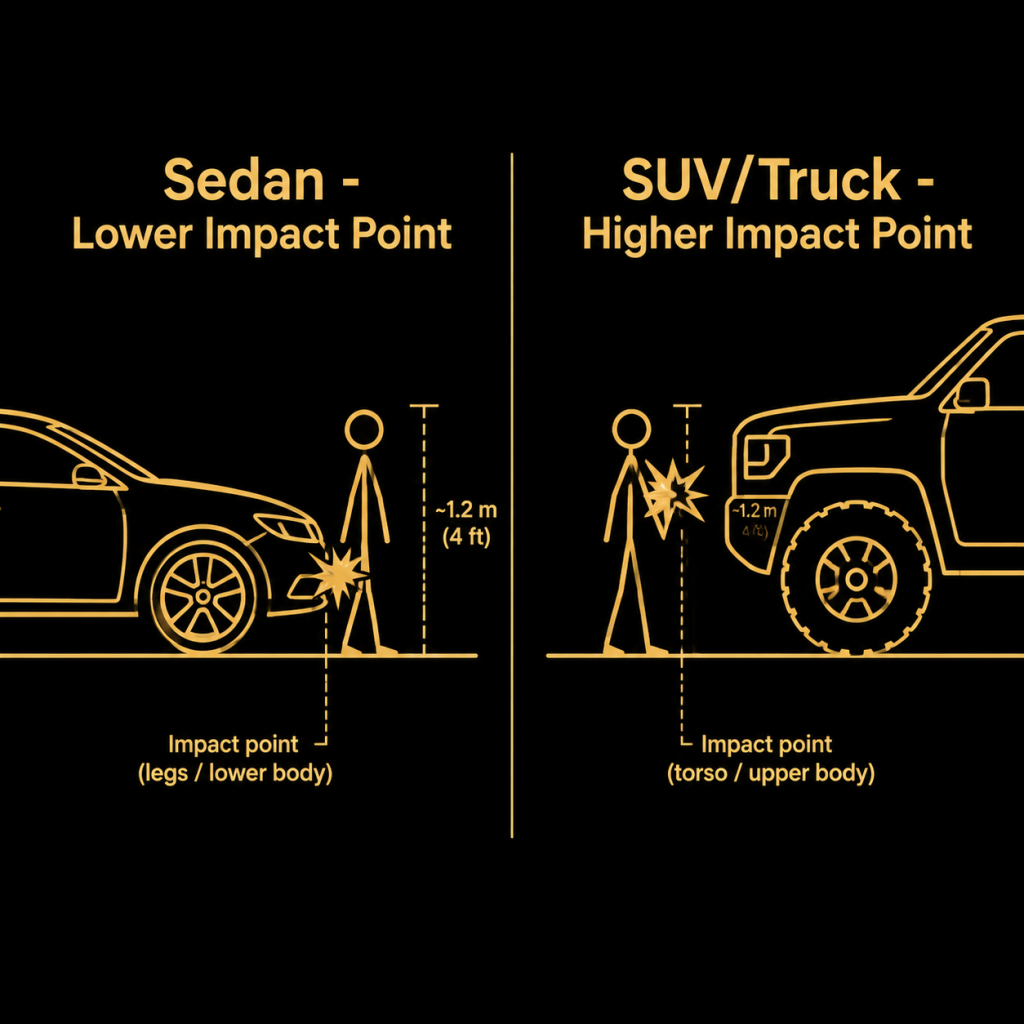
Pedestrian deaths have climbed 78% since 2009 and now total more than 7,300 a year, according to the Insurance Institute for Highway Safety. That’s happening at the same time overall traffic deaths are falling. The reason isn’t a mystery once you look at the research: IIHS found that pickups, SUVs, and vans with a hood height above 40 inches are about 45% more likely to kill a pedestrian in a crash than cars with a lower, sloped front end. Vehicles with a blunt, vertical front end (think of the boxy front grille on a lot of newer trucks) were 26% more likely to cause a pedestrian fatality than ones with a sloped nose, even at similar heights.
The mechanism is almost too simple. A taller, blunter front end strikes a pedestrian higher on the body, often in the torso or head, and tends to knock them down and forward instead of up onto the hood the way older, lower-nosed sedans did. Worse impact geometry, worse outcome.
So airbags, crumple zones, and automatic braking have made modern cars genuinely safer for the people inside them. Nobody designed the same decade of progress for the people outside them, and the data shows it.
The New Face of Distraction: It’s Not Just Texting Anymore
“Distracted driving” still gets pictured as someone glancing at a text. That’s real, but it’s an increasingly incomplete picture of what’s actually happening on a 2026 dashboard.
A lot of new vehicles have replaced physical knobs and buttons, the kind you could adjust by feel, with a single touchscreen that requires looking directly at it to change the temperature, switch a song, or adjust mirrors. Where a driver in 2010 might glance down to change a radio dial without much thought, a driver today is sometimes navigating two or three menu taps on a screen to do the same thing, eyes fully off the road the entire time.
That’s a design problem hiding inside a behavior statistic. It’s also worth remembering that phone-based distraction hasn’t gone anywhere either, it’s just gotten more sophisticated, with GPS navigation, texting, video calls, and social media all competing for the same six inches of attention that used to just have a radio on it.
Other Factors Reshaping Today’s Roads
The big four cover most fatalities, but a few other trends are worth naming.
- Driver fatigue. Harder to prove than alcohol impairment (there’s no breathalyzer for tired), and likely undercounted in official cause data.
- Aggressive and reckless driving. Tailgating, weaving, and road rage incidents that don’t fit neatly into “speeding” but carry the same underlying disregard for other people on the road.
- Road and intersection design. Wide, high-speed arterial roads with long crossing distances are consistently linked to higher pedestrian death rates than roads designed with shorter crossings and lower design speeds.
- Overreliance on driver-assist technology. Adaptive cruise control and lane-keeping features are genuinely useful, but they’re increasingly linked to a false sense of security that leads some drivers to disengage attention they should still be giving the road.
How the National Numbers Play Out in Florida and Illinois
Demesmin & Dover represents crash victims in Florida and Illinois, and the national trends show up locally with their own flavor.
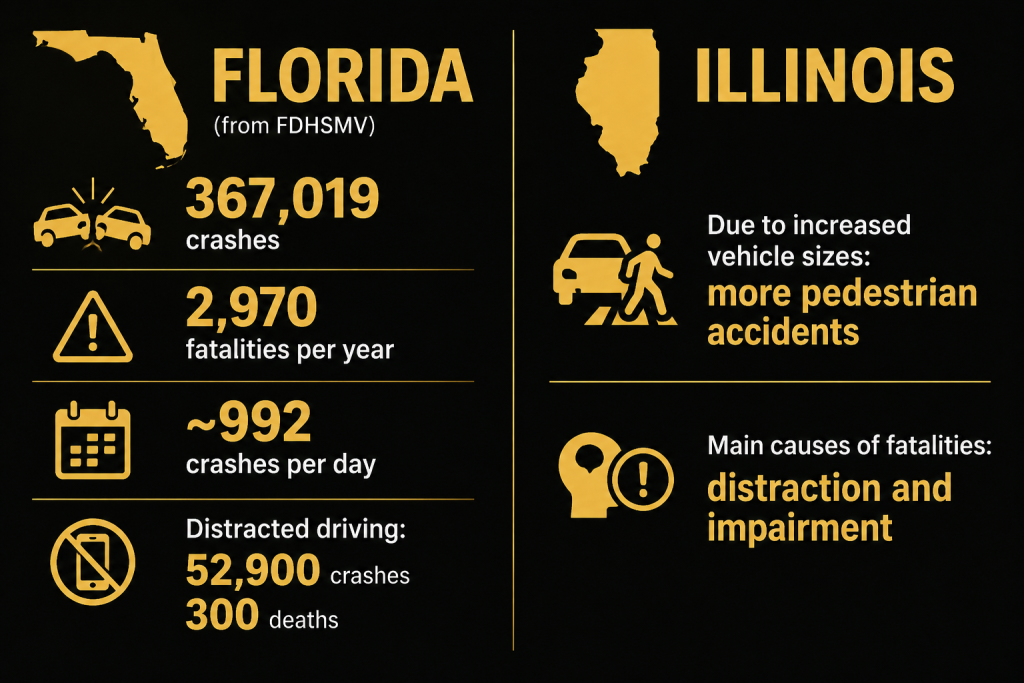
Florida recorded 367,019 crashes and 2,970 fatalities in a recent reporting year, roughly 992 crashes every day, according to the Florida Department of Highway Safety and Motor Vehicles. Distracted driving alone was tied to more than 52,900 crashes and over 300 deaths, the state’s highest distraction-related death toll in several years, and FLHSMV notes a crash occurs somewhere in the state roughly every 44 seconds. Speeding was cited in 349 fatalities in the same period.
Illinois has its own version of this problem, with the same underlying pattern nationally: increased vehicle size correlating with worse pedestrian outcomes in dense urban corridors like Chicago, alongside distraction and impairment doing most of the same damage they do everywhere else.
How “Cause” Becomes “Fault” in a Car Accident Claim
This is the piece most stat roundups skip entirely, and it’s the one that actually matters if you were just in a crash.
When a police officer investigates an accident, they document contributing factors, speeding, a phone found unlocked at the scene, a failed field sobriety test, skid mark length, damage patterns. That report becomes core evidence. If an officer cites the other driver for a violation like failing to yield or careless driving, that citation can support a legal theory called negligence per se, essentially, breaking a safety law is treated as strong evidence of negligence on its own.
Fault also isn’t always all-or-nothing. Both Florida and Illinois use versions of comparative negligence, meaning your compensation can be reduced by your own percentage of fault rather than eliminated entirely, unless you cross a state-specific threshold. Understanding how the specific cause of your crash maps onto these legal standards is exactly the kind of analysis that shouldn’t be left to guesswork or an insurance adjuster’s first phone call.
What to Do Immediately After a Serious Car Accident
- Call 911 and get medical attention, even if you feel fine. Adrenaline hides real injuries.
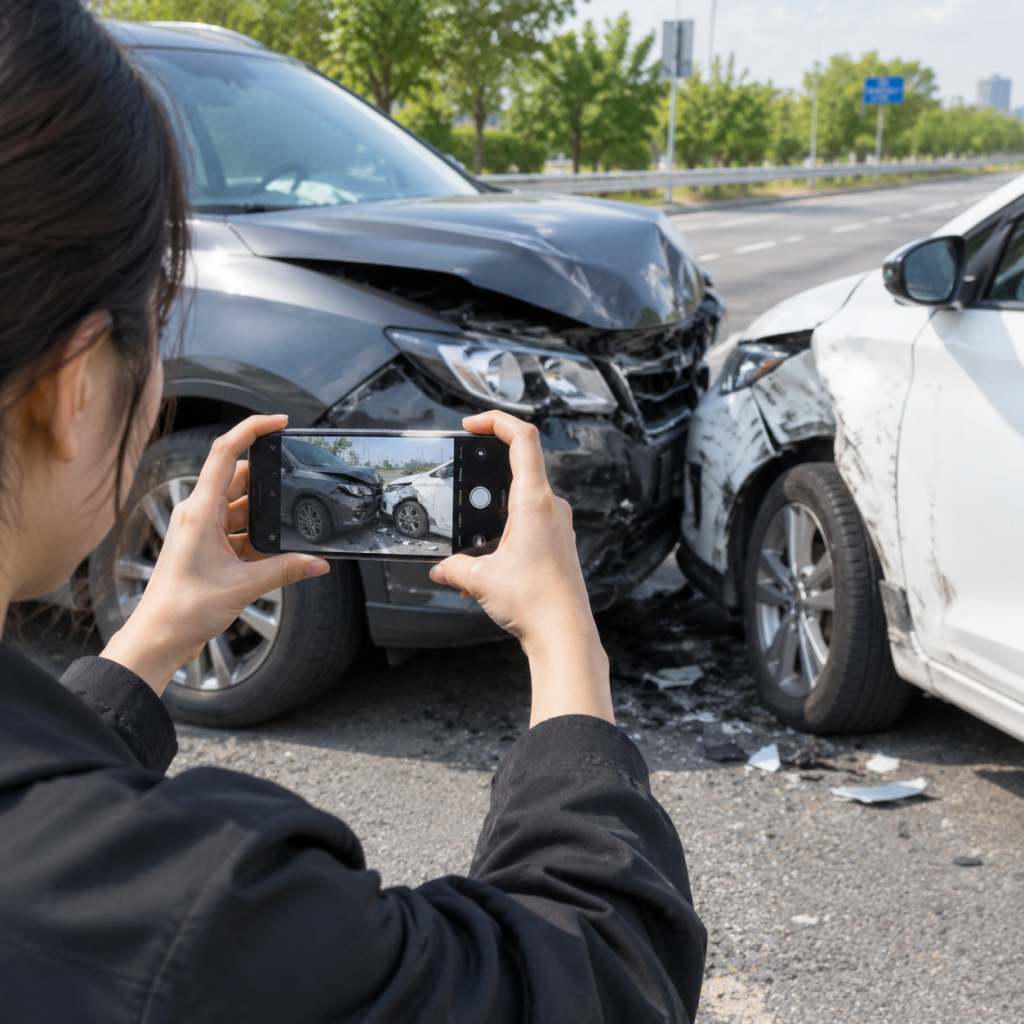
- Document the scene with photos, vehicle positions, skid marks, visible damage, road conditions, and any traffic signals or signs nearby.
- Get the police report number and the responding officer’s name.
- Get witness contact information before people scatter.
- Avoid discussing fault at the scene. Stick to facts with police, not opinions or apologies.
- See a doctor promptly, even for injuries that seem minor at first.
- Don’t give a recorded statement to any insurance company before speaking with an attorney.
FAQ
What is the leading cause of fatal car accidents in the US?
Speeding, alcohol/drug impairment, distracted driving, and failure to wear a seatbelt account for the large majority of traffic deaths, with speeding and impaired driving each contributing to roughly 3 in 10 fatal crashes.
Are car accidents becoming more or less common?
Overall traffic fatalities are at their lowest rate since 2019, thanks largely to vehicle safety technology. Pedestrian and cyclist deaths, however, have risen sharply over the same period.
Why are pedestrian deaths rising if cars are safer?
Modern vehicle safety features primarily protect people inside the car. Taller, blunter-fronted SUVs and trucks are measurably more dangerous to pedestrians in a collision, which has driven pedestrian deaths up even as driver deaths have fallen.
Does a car’s infotainment touchscreen count as distracted driving?
Yes. Any activity that takes a driver’s eyes off the road, including navigating a touchscreen menu, can support a distracted driving finding and factor into a negligence claim.
How does a stated cause of the crash affect my injury claim?
The documented cause (speeding, a traffic violation, impairment) often becomes central evidence in establishing fault, and can support a legal theory called negligence per se when a specific safety law was broken.
What if I was partly at fault for the accident?
Both Florida and Illinois use comparative negligence systems, meaning you may still recover compensation reduced by your percentage of fault, rather than being barred from recovering at all, depending on the state’s specific threshold.
Get Help From Demesmin & Dover
Understanding what caused a crash is step one. Proving it, and making sure it translates into the compensation you’re actually owed, is a different job entirely. Demesmin & Dover represents car accident victims across Florida and Illinois, and we’re available 24/7 because crashes don’t check a calendar first.
Call now: 866-954-MORE (6673)or Start your free case review.