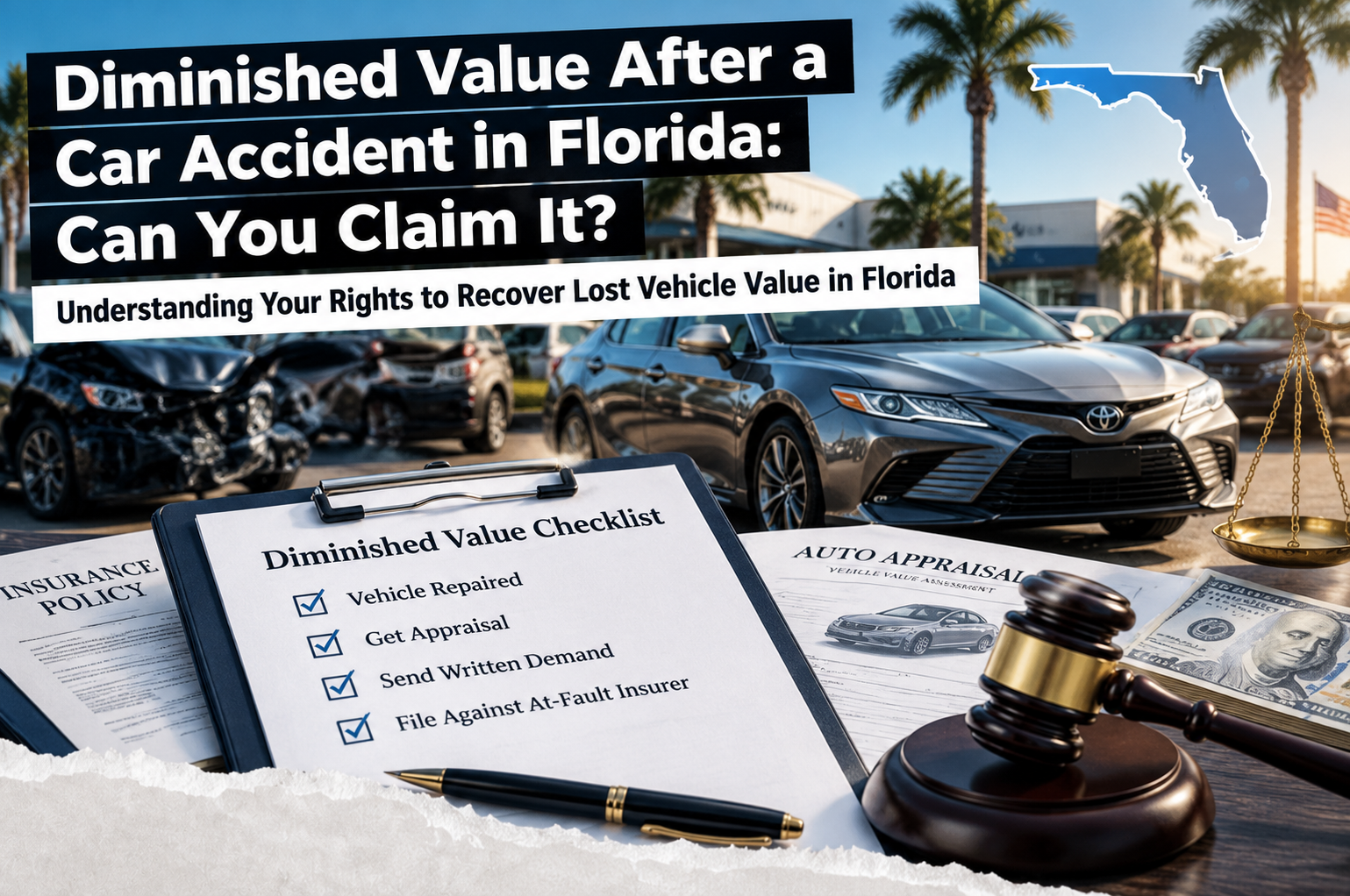
Your car came back from the body shop looking perfect. The paint matches, the panels line up, the insurance company even washed it. Then you try to sell it and a dealer says, “Sure, but it has an accident on the report.” Your car is worth less after the accident, and you didn’t cause it. Here’s what Florida law says you can do about that.
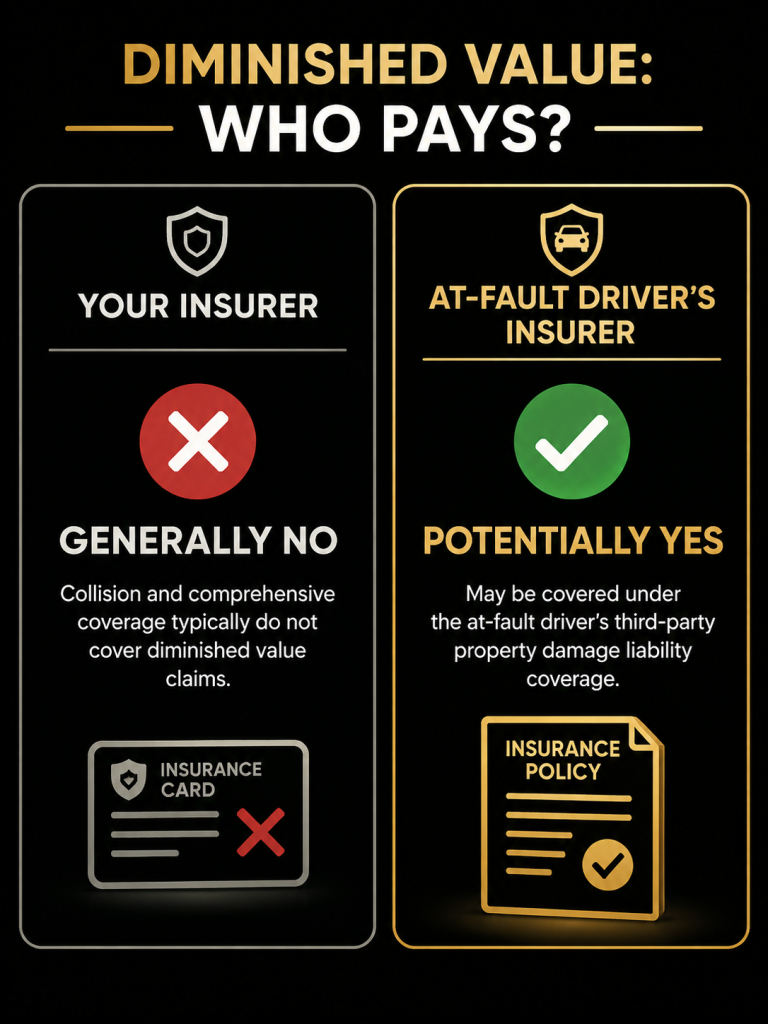
Quick Answer: Yes, in many cases you can claim diminished value in Florida, but from the at-fault driver’s insurance, not your own. In Siegle v. Progressive (Fla. 2002), the Florida Supreme Court held that a standard collision policy does not require your own insurer to pay diminished value after a proper repair. A third-party claim against the driver who caused the crash is the usual route, and you have to prove the amount. Those claims draw on the driver’s property damage coverage, which has a $10,000 state minimum and also pays repairs and other losses. You generally have 2 years to file.
That’s the summary. The details below are where people lose money.
What Diminished Value Actually Is
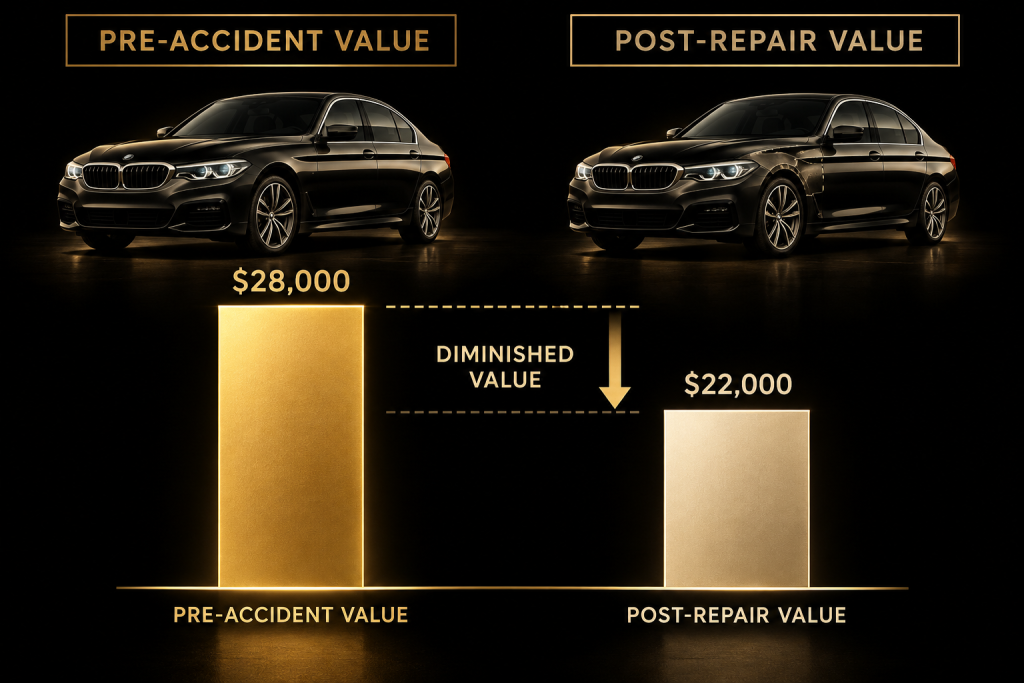
Diminished value is the drop in your car’s market value after it’s been in a crash and repaired. In Siegle, the plaintiff described the “inherent” version as “the difference between the pre-loss value of the insured automobile and its value after it was repaired and returned.”
Put simply: a car with a clean history is worth more than the exact same car with a collision on its record, even if the repair is perfect. Buyers worry about hidden damage, and vehicle history reports show the accident.
Modern repairs add another wrinkle. CCC’s Crash Course reports an average repair cost of $4,768 (year to date through Q3 2025), and calibrations of sensors and cameras appeared on roughly 36% of repair estimates. That’s a lot of technology to repair, and repair records matter when you try to show what happened to the car.
Can You Claim Diminished Value in Florida? Two Routes
| Route | Who pays | Can you recover diminished value? |
|---|---|---|
| First-party | Your own collision coverage | Generally no, under Siegle, for a standard policy that repairs or replaces with “like kind and quality.” A policy that expressly covers diminished value could differ, so check yours. |
| Third-party | The at-fault driver’s property damage liability insurer | Yes, potentially. Florida courts have long said repair cost plus diminution in value ordinarily measures the loss, and you must prove the diminution (McHale v. Farm Bureau, Fla. 3d DCA 1982). |
So the question to ask isn’t “Does my insurer owe me?” It’s “Who caused the crash, and what’s their coverage?”
Two practical notes:
- If you were at fault, or partly at fault, a third-party diminished value claim is weaker or unavailable, and your own policy generally won’t pay it.
- If the car was leased, the lessor may have rights too, so check your lease.
he $10,000 Squeeze
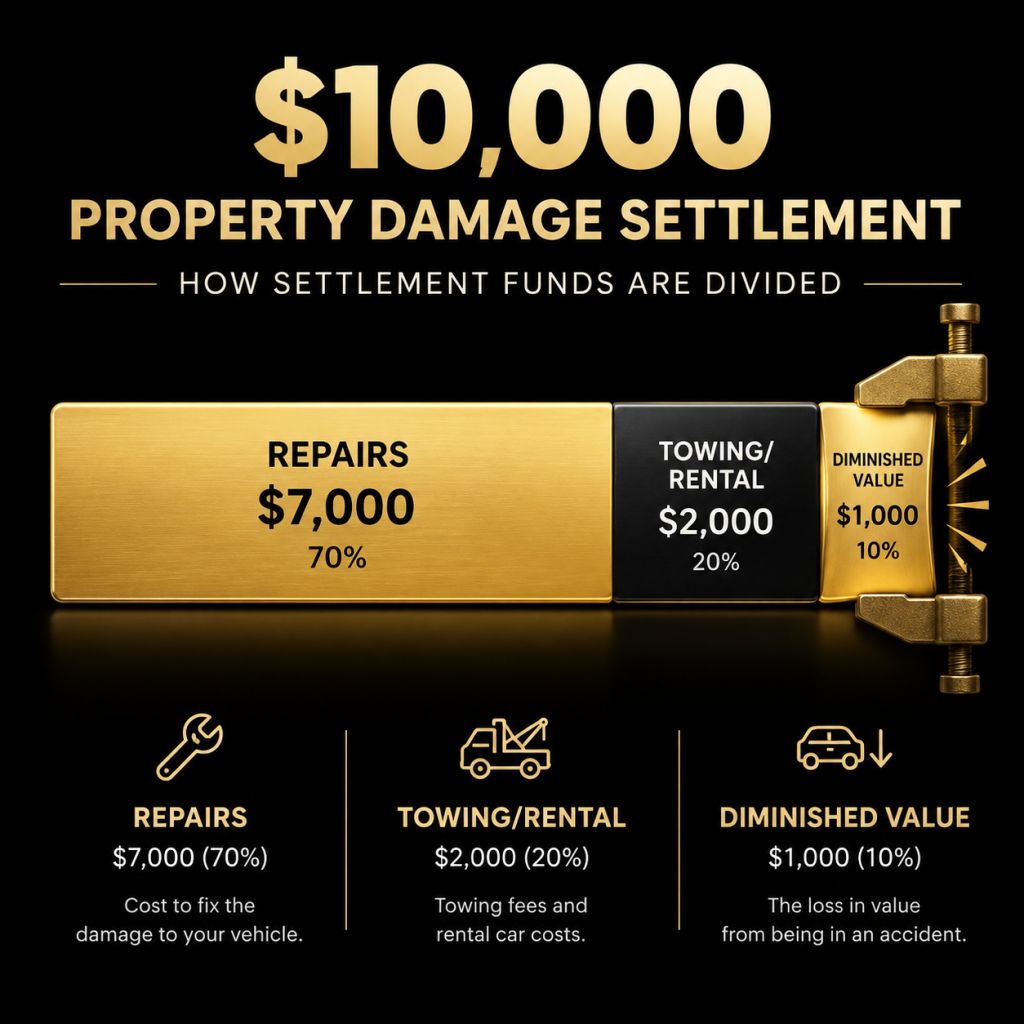
Here’s the catch most pages skip. In Florida, a driver is required to carry only $10,000 in property damage liability coverage (Fla. Stat. § 324.022). That single limit has to cover everything the driver damaged:
- Your repairs
- Towing and storage
- Rental or loss of use
- Diminished value
- Any other property damaged in the crash
If your repair bill uses most of the $10,000, there may be little left for diminished value. And if the at-fault driver has no insurance, Florida’s uninsured motorist coverage is designed for bodily injury, not property damage, so your own collision coverage pays repairs but generally not diminished value.
That’s why early and organized matters. Your claim sits in a line with other losses and a limit that may not stretch.
How to Prove Your Car Is Worth Less
You carry the burden of proof, so build the file:
- Establish pre-accident value. Use comparable listings, pricing guides, and your car’s features, mileage, and condition.
- Document the repair. Keep the estimate, the final invoice, photos, and parts used. Structural and airbag damage, and repairs involving sensors, tend to matter more than a cosmetic fix.
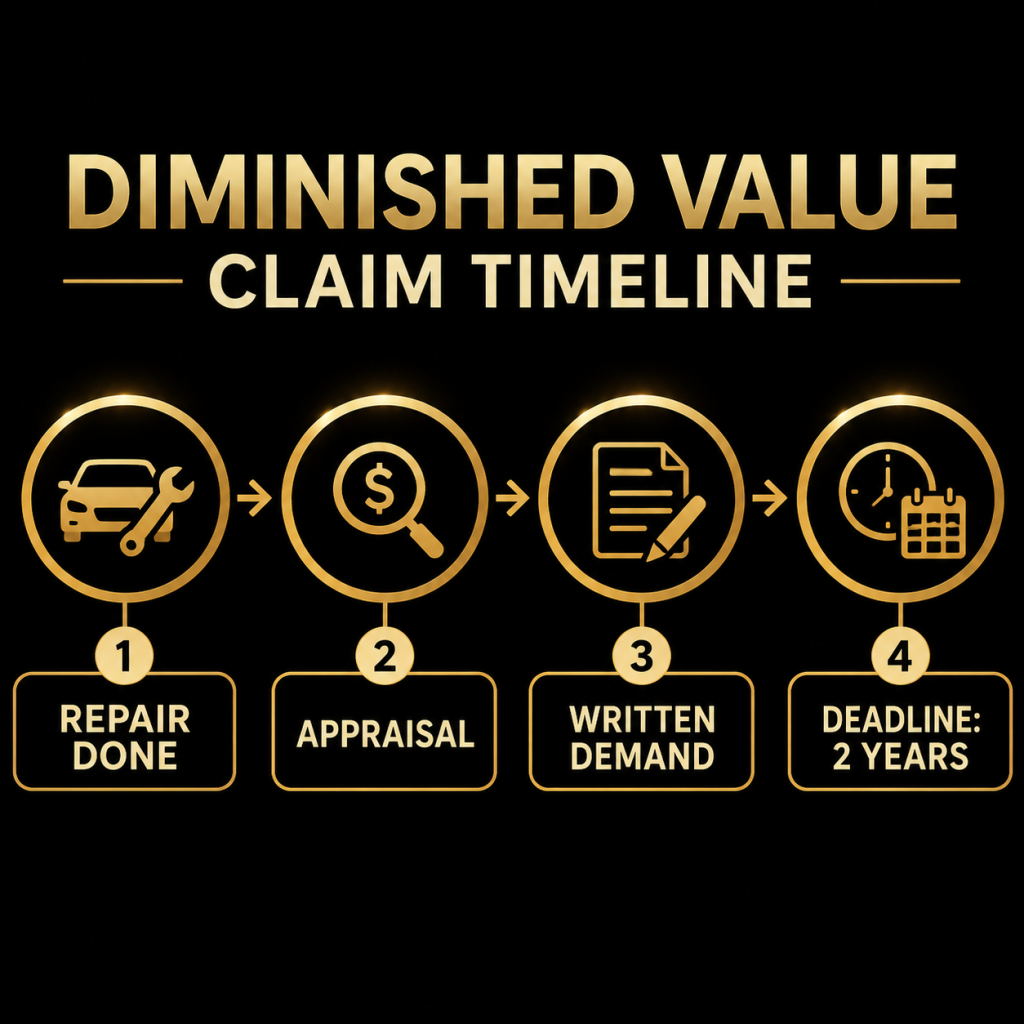
- Get an independent appraisal after the repair. A qualified appraiser estimates what the car is worth now with the accident history. Waiting until the repair is finished matters, because that’s when you can measure the post-repair value.
- Gather comparables. Look for similar cars with and without accident history.
- Keep vehicle history reports showing the accident entry.
- Put it in a written demand to the at-fault driver’s insurer, with the supporting documents.
A word on “17c.” Insurers sometimes use a formula (often called 17c) that starts with a capped percentage of the car’s value and applies multipliers for damage and mileage. It’s an insurance industry tool, not a Florida legal standard, and your claim is measured by what the car actually lost in the market. Be skeptical of any number that comes from a formula instead of comparables.
What Insurers Say, and How to Respond
| What they say | A better response |
|---|---|
| “Florida doesn’t pay diminished value.” | It doesn’t pay it from your collision coverage, but you can claim it from the at-fault driver’s insurer. |
| “The repair restored the car.” | A perfect repair doesn’t erase the accident history that buyers see. |
| “Your car had prior damage.” | Prior damage can reduce the number, but it doesn’t eliminate a new loss. Show the difference. |
| “Our policy limit is used up.” | Then the limit matters, and you may need to look at other sources. |
| “Here’s our formula.” | Ask for the comparables behind it. |
Timing, Releases, and the Two-Year Deadline
- Deadline. Florida requires an action “founded on negligence” to be filed within 2 years (Fla. Stat. § 95.11(5)(a)). Some older sites still say four years, which was the rule before the 2023 changes.
- Don’t sign too fast. An insurer’s payment for repairs may come with a release that ends all property damage claims, including diminished value. Read before signing, and ask whether the release covers diminished value.
- Don’t wait too long either. Evidence like repair records, listings, and the appraisal gets harder to build over time.
Diminished Value and Your Injury Claim
If you were hurt in the crash, the diminished value claim is separate from your injury claim, but they happen at the same time. A few cautions:
- Don’t let a property settlement release your injury claim. Check every document.
- Don’t give a recorded statement to the at-fault insurer without advice, since what you say about the crash affects both claims.
- Remember the 14-day rule. Florida PIP generally requires initial medical care within 14 days of the crash.
- Bundle the work. A car accident lawyer in Florida who handles your injury claim can include diminished value in the same demand and make sure one doesn’t undercut the other.
Do You Need a Diminished Value Attorney?
Honest answer: not always. For a small claim on a modest repair, you may be able to gather the documents and negotiate yourself.
A diminished value attorney (or a car accident lawyer in Florida) is worth a call when:
- You were injured, which is when the stakes jump
- The car is high-value or newer, so the loss is large
- The at-fault driver’s policy limit is low or shared with other claims
- The insurer denies the claim or offers a formula-based number
- The other driver has no insurance or fled
- You’re asked to sign a release and aren’t sure what it covers
Demesmin & Dover represents injured drivers across Florida from our Fort Lauderdale and Tampa offices.
FAQ
Can you claim diminished value in Florida?
Yes, potentially, from the at-fault driver’s property damage insurer. Your own collision coverage generally doesn’t pay it under Siegle v. Progressive (Fla. 2002).
Does my insurance pay diminished value?
Generally no, for a standard policy. Check yours for any endorsement that says otherwise.
How do I prove my car is worth less after an accident?
With pre-accident value evidence, repair records, an independent post-repair appraisal, comparable listings, and a vehicle history report.
How much is diminished value in Florida?
It depends on the car, the damage, and the market. There’s no fixed percentage under Florida law, and you must prove the amount.
What if the at-fault driver has only the $10,000 minimum?
That limit must cover all property damage, including repairs, so little may remain for diminished value.
What if the other driver had no insurance?
Your own collision coverage may pay repairs, but diminished value is generally not covered, and uninsured motorist coverage is for injuries.
How long do I have to file?
Generally 2 years for a negligence claim in Florida (§ 95.11(5)(a)).
Get Help From Demesmin & Dover
If your car is worth less because of someone else’s mistake, you shouldn’t have to absorb it. Demesmin & Dover represents injured drivers across Florida, from our Fort Lauderdale and Tampa offices, and we’re available 24/7.
Call now: 866-954-MORE (6673) or Start your free case review.