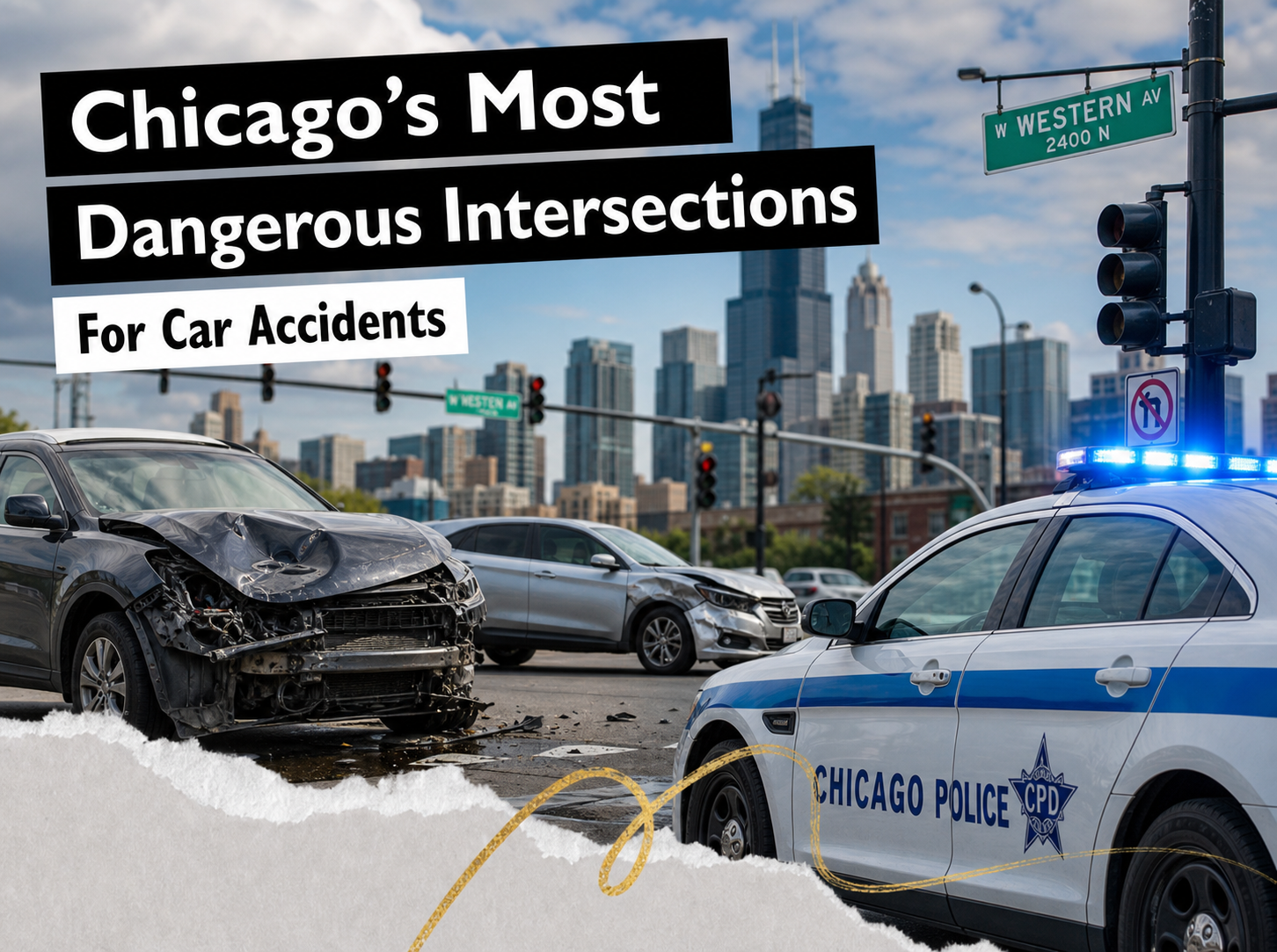
Ask any longtime Chicago driver which intersection scares them the most, and you’ll usually get an answer without much hesitation. There’s a reason certain corners of this city come up again and again in conversations about near misses and fender benders. It isn’t just bad luck. The data backs up what drivers already feel in their gut every time they approach these spots.
That’s why here at Demesmin & Dover Law Firm, we believe in making things clear, this way you know exactly what you’re dealing with if you’re ever involved in a car accident in Chicago. As a Chicago accident attorney firm, we see how often these same intersections show up in our clients’ stories.
Why Some Intersections Are Simply More Dangerous
Chicago’s Department of Transportation doesn’t leave this to guesswork. According to the city’s own Traffic Safety data resources, CDOT has identified 43 high crash corridors and eight high crash areas across the city as part of its Vision Zero planning. Seven of those eight high crash areas sit on the West and South Sides, with the remainder concentrated downtown, where dense pedestrian and vehicle traffic combine.
The Intersection Chicagoans Talk About Most
When the Chicago Sun-Times asked readers to name the city’s worst intersection, one location stood out by a wide margin. The convergence of East 79th Street, South Stony Island Avenue, and South Chicago Avenue drew more mentions than any other spot in the city, with readers describing it as chaotic and difficult to navigate safely, regardless of which direction you’re coming from.
Other Locations Chicagoans Flag Often
The same Sun-Times reader survey and local reporting point to a handful of other consistently troublesome intersections:
Western Avenue and 55th Street, where a poorly timed signal between the Western Avenue boulevard and the avenue itself creates long backups and confusion
Milwaukee, Halsted, and Chicago Avenues, a chaotic three-way convergence that longtime residents have pushed for better turn signals at for years
Michigan Avenue and East Wacker Drive, where heavy tourist foot traffic combines with frequent rear end collisions
Neighborhood intersections that build up complaints over time. Block Club Chicago reported that residents near Belmont and Karlov Avenues pushed for years before the city finally installed a stop sign in late 2025, after repeated crashes and at least one pedestrian and cyclist hit within days of each other.
The Bigger Picture: Chicago’s Deadliest Roads
Intersections don’t exist in isolation. They’re usually dangerous because of the roads feeding into them, and Chicago’s own data makes that connection clear.
Lake Shore Drive Stands Out
According to Chicago Sun-Times reporting from August 2025, DuSable Lake Shore Drive has logged 61 deaths since April 2019, making it the city’s deadliest road by the Vision Zero fatality dashboard’s own count, notably without a single speed camera along its length.
Road Width Is a Major Factor
That same reporting cites CDOT’s own annual crash report finding that Chicago streets wider than 50 feet have 14 times as many fatal crashes as narrower streets. Wide roads, the kind that feed into many of the city’s most dangerous intersections, tend to encourage higher speeds, and speed is consistently the biggest factor in whether a crash turns deadly.
Enforcement Hasn’t Kept Pace
The Sun-Times also reported that just 0.7% of traffic tickets issued by Chicago Police in 2023 were for speeding, even though speed remains the single largest factor in fatal crashes.
Progress in 2025, But the City’s Goal Remains Out of Reach
There’s genuine good news buried in the 2025 data, alongside a reality check.
A Nine-Year Low
According to the Vision Zero Network’s 2025 progress report, Chicago’s provisional data showed a 23% reduction in traffic deaths compared to 2024, reaching the city’s lowest total in nine years.
The Original Goal Is Still Far Off
That improvement comes against a backdrop of a much bigger promise. Chicago originally committed to eliminating traffic deaths entirely by 2026 under its Vision Zero Action Plan. As the Sun-Times reported, 2024 alone still saw 109 people killed on Chicago’s roads, 69 motorists, 38 pedestrians, and 2 cyclists, making clear that even a meaningful year-over-year improvement still leaves the city far short of zero.
What to Do If You’re in a Car Accident at a Dangerous Intersection
A few things matter more when the intersection itself has a documented history of problems.
Call 911 and get a police report, even for a seemingly minor collision, since an official record matters more at intersections with a known crash history.
Photograph the intersection itself, not just the vehicles, including signal timing, sightlines, and any signage or lack of it, to help gather evidence early and preserve strong evidence for a personal injury case.
Note the exact time of day. Rush hour congestion, pedestrian volume, and even sun glare at certain times can all factor into how a crash happened.
Get medical attention, even if you feel fine immediately after, and keep medical records while documenting medical treatment from the start.
Report ongoing hazards to 311 or your alderman’s office. A documented history of complaints at a specific intersection, like the years-long push that finally got a stop sign installed at Belmont and Karlov, can matter both for public safety and for building a claim.
Early documentation matters because insurance companies often undervalue claims or deny valid ones, and maintaining evidence after an accident is crucial.
Why Legal Help Matters After an Intersection Crash
When a crash happens at an intersection with a well documented history of problems, that history can actually work in your favor, but only if it’s properly gathered and presented. A chicago personal injury lawyer in Chicago can pull CDOT crash data, prior complaint records, and signal timing information to help establish what role the intersection itself played, on top of building the more familiar parts of your claim.
Talk to Chicago Personal Injury Attorneys Who Know These Intersections
Whether your crash happened at one of the city’s most notorious intersections or a corner that’s only recently started drawing complaints, knowing the road’s history can make a real difference in your claim.
The team at Demesmin & Dover Law Firm has experience handling car accidents in Chicago’s most dangerous corridors and intersections. Contact Demesmin & Dover today for a free consultation, there’s no fee unless we win your case.