
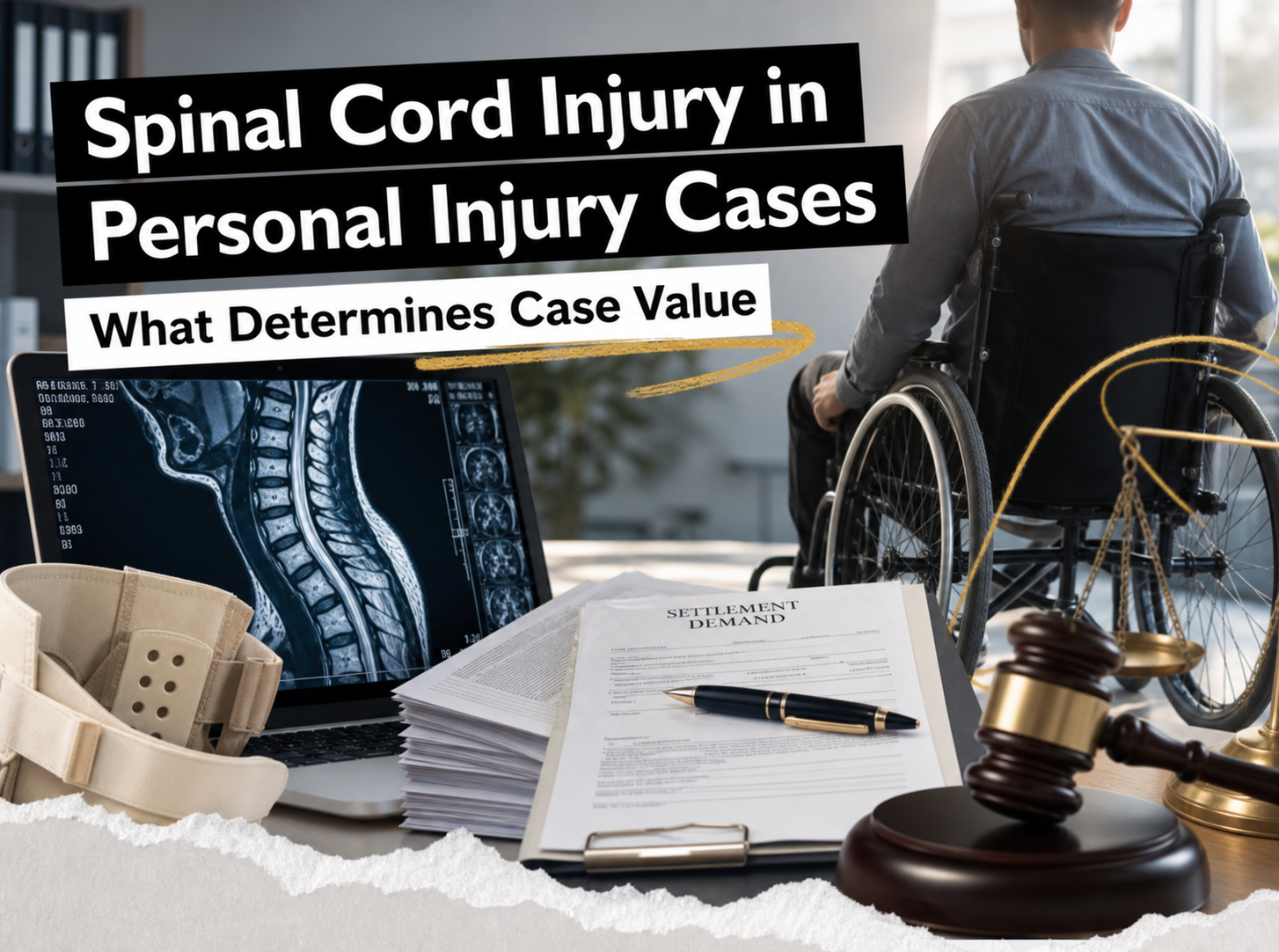
A spinal cord injury is a severe medical injury that changes everything at once. Medical bills start immediately, work becomes uncertain, and daily life looks completely different than it did a week earlier. Somewhere in the middle of all that, someone mentions a settlement, and it’s natural to wonder what that number is actually supposed to cover, and why two seemingly similar injuries can end up valued so differently.
That’s why here at Demesmin & Dover Law Firm, we believe in making things clear, this way you know exactly what you’re dealing with, whether your case is in Florida or Illinois.
The Real Cost of a Spinal Cord Injury
Before getting into how a settlement gets calculated, it helps to understand just how expensive these injuries actually are over a lifetime.
What the Research Shows
The National Spinal Cord Injury Statistical Center (NSCISC) at the University of Alabama at Birmingham is the leading research body tracking these costs nationally, and its 2025 data sheet breaks lifetime and annual expenses down by severity of injury. According to that same 2025 report, indirect costs alone, meaning lost wages, fringe benefits, and lost productivity, averaged $95,309 per year in 2024 dollars, and that figure doesn’t even include direct medical and living expenses, which vary dramatically depending on the severity and level of the injury.
Severity Drives Almost Everything
The NSCISC’s data consistently shows that costs scale with how much function a person retains. A person with high tetraplegia, meaning paralysis affecting all four limbs at a high level in the spine, faces dramatically higher first-year and lifetime costs than someone with incomplete paraplegia who retains significant mobility and independence. This is exactly why a detailed medical evaluation of the injury’s classification is one of the first steps in valuing any spinal cord injury claim.
What Actually Determines Case Value
A settlement isn’t a single number pulled from a chart. It’s built from several distinct categories that get calculated separately and then added together.
Economic Damages
These are the costs that can be documented with receipts, bills, and projections, including:
- Past and future medical expenses, including surgery, rehabilitation, and long term care
- Home and vehicle modifications needed to accommodate the injury
- Lost wages and diminished future earning capacity
- Assistive equipment, from wheelchairs to specialized medical devices
Non-Economic Damages
These cover the harder-to-quantify impact of the injury, including pain and suffering, emotional pain, loss of enjoyment of life, and the emotional toll of a permanent disability. Because these damages don’t come with a receipt, they’re typically calculated based on the severity of the injury, its permanence, and how it affects a person’s daily life, reflecting both the physical and emotional consequences of a permanent disability.
The Severity and Permanence of the Injury
Complete injuries, where all function below the injury site is lost, are generally valued higher than incomplete injuries, where some function remains. Similarly, injuries higher on the spine, affecting more of the body, generally carry higher value than lower spinal injuries.
How Florida Law Affects Case Value
Florida made a significant change to how fault gets handled in personal injury cases, and it directly affects what a spinal cord injury victim can actually recover.
The 51% Bar Rule
Under Florida Statute 768.81, enacted through 2023 tort reform, Florida shifted from a pure comparative negligence system to a modified system. If you’re found more than 50% at fault for your own injury, you’re barred from recovering any damages at all. If you’re found 50% or less at fault, your recovery is reduced by your percentage of fault.
Why This Matters So Much for Catastrophic Injuries
Given how expensive spinal cord injury cases already are, a fault dispute isn’t just a technicality. If an insurance company can push your assigned fault percentage above 50%, an otherwise multi-million dollar claim can be reduced to zero. This makes early evidence gathering, accident reconstruction, and a clear account of how the injury happened critically important in Florida cases.
How Illinois Law Affects Case Value
Illinois uses a similar framework, though the underlying statute and its history look a bit different.
Illinois’s Modified Comparative Negligence Standard
Under 735 ILCS 5/2-1116, Illinois also applies a 51% bar. An injured party can recover damages as long as their own fault is 50% or less, with the award reduced proportionally to their percentage of fault. Cross the 50% threshold, and recovery is barred entirely, the same structure Florida now uses.
Fault Percentage Is Decided by the Trier of Fact
In both states, the exact fault percentage isn’t determined by an insurance adjuster or a police report. Still, police reports can be important evidence in showing how the accident happened and who may be liable, especially if the other party disputes fault. Yet at the end of the day it’s ultimately decided by a judge or jury, which is why insurance companies frequently push hard during negotiations to shift blame toward the injured person before a case ever gets that far.
What Both States Have in Common
Despite some differences in how each state got here, Florida and Illinois now share a nearly identical framework for one of the most important factors in any spinal cord injury case.
- Both states use a 51% modified comparative negligence bar
- In both states, damages are reduced proportionally below that threshold
- In both states, fault percentage is one of the most heavily contested issues in negotiations and litigation
- In both states, the severity and permanence of the injury remain the single biggest driver of case value, separate from the fault analysis entirely
What to Do to Protect Your Case Value
A few steps matter more in a spinal cord injury case than in a typical injury claim, given how much is riding on both the medical picture and the fault determination.
- Get a thorough medical evaluation early, including a clear classification of the injury’s severity and level.
- Preserve accident evidence immediately, including photos, witness information, and any available black box or scene data, since fault disputes can make or break the entire claim in both states.
- Keep detailed records of every cost, not just medical bills, but home modifications, lost income, and equipment needs as they arise.
- Avoid giving a recorded statement to an insurance adjuster before speaking with an attorney, since early statements are often used to build a fault argument later.
- Get a life care plan prepared that accounts for the injury’s full lifetime cost, not just current or near-term expenses.
Do You Need an Attorney for a Spinal Cord Injury Claim?
Given how much is at stake, both in dollar terms and in the fault analysis that can eliminate a claim entirely, spinal cord injury cases are rarely ones people navigate successfully on their own, especially because your concern should be receiving the needed medical care that focuses on preventing further damage and maximizing neurological recovery. Building a case that accurately reflects lifetime costs, while also protecting against a fault argument that could bar recovery altogether, takes real experience with both the medical and legal sides of these claims, including emergency treatment that often begins with stabilization and management of breathing; these cases also benefit from providers with specialized knowledge of spinal cord injury care.
Talk to an Attorney in Florida or Illinois
Spinal cord injuries often arise after a car accident and carry some of the highest lifetime costs of any personal injury, and in both Florida and Illinois, the fault determination can make the difference between a life-changing settlement and nothing at all.
The team at Demesmin & Dover Law Firm has experience handling catastrophic injury claims in both Florida and Illinois, including the fault disputes that so often determine what these cases are actually worth. Contact Demesmin & Dover today for a free consultation, share all the details so a personal injury attorney can evaluate your personal injury claim and advise you on seeking financial compensation; there’s no fee unless we win your case.