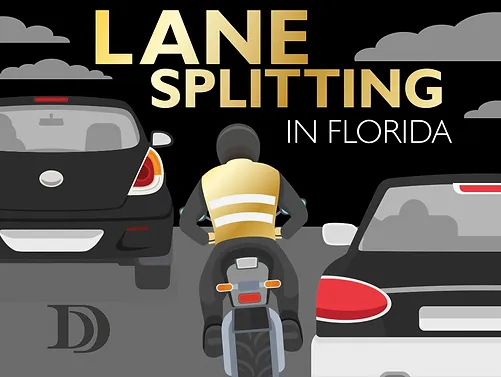
No. Lane splitting is illegal in Florida. State law prohibits riding a motorcycle between lanes of traffic or between rows of vehicles. Two motorcycles may ride side by side in one lane, which is called lane sharing and is legal.
What is lane splitting?
Lane splitting is riding a motorcycle between two lanes of traffic that are moving in the same direction, usually to pass slower or stopped vehicles. Riders also call it white-lining or stripe-riding.
What does Florida law say about lane splitting?
Florida Statute 316.209 covers how motorcycles may use a lane. It sets four rules:
- A motorcycle is entitled to the full use of a lane, and other drivers may not crowd it out of that lane.
- A rider may not overtake and pass in the same lane as the vehicle being passed.
- A rider may not operate a motorcycle “between lanes of traffic or between adjacent lines or rows of vehicles.”
- No more than two motorcycles may ride side by side in one lane.
The passing and lane-splitting rules do not apply to police officers and firefighters on duty.
H2: What is the difference between lane splitting, lane filtering, and lane sharing?
Practice | What it means | Legal in Florida? |
|---|---|---|
Lane splitting | Riding between lanes of moving traffic | No |
Lane filtering | Moving between stopped vehicles, usually at a red light | No |
Lane sharing | Two motorcycles riding side by side in one lane | Yes, up to two |
What is the penalty for lane splitting in Florida?
Lane splitting is a noncriminal traffic infraction, punished as a moving violation.
A citation can also raise your insurance rates.
The larger cost comes if there is a crash. A lane-splitting citation gives the other driver’s insurance company a reason to argue that you caused the collision.
Can I still recover compensation if I was lane splitting when I was hit?
Possibly. Florida uses a modified comparative negligence rule. Your compensation is reduced by your percentage of fault, and you cannot recover from the other party if you are found more than 50% at fault.
Lane splitting does not automatically make you the one at fault. A driver who changed lanes without signaling, was texting, or was speeding may still carry most of the blame. What decides the percentages is evidence: the crash report, witness statements, video, and the damage to both vehicles.
What if a driver hit me while I was riding legally?
The same statute protects you. A motorcycle is entitled to the full use of its lane, and a driver who drifts into your lane or tries to squeeze past you in it has broken that rule. That violation is evidence of the driver’s negligence in an injury claim.
Which states allow lane splitting?
California is the only state that allows lane splitting in moving traffic. A few states, including Arizona, Utah, Montana, Colorado, and Minnesota, allow a limited form of lane filtering under set conditions. Florida allows neither.
If you ride in from one of those states, Florida’s rule applies as soon as you cross the state line.
Will lane splitting become legal in Florida?
Not unless the Legislature changes the statute. As of October 2026, Florida has not legalized lane splitting or lane filtering.
What should I do after a motorcycle accident in Florida?
- Call 911 and get medical care, even if you feel fine. Some injuries take days to show.
- Photograph the scene, your motorcycle, the other vehicle, and your injuries.
- Get names and phone numbers from witnesses.
- Do not give a recorded statement to the other driver’s insurance company before you get legal advice.
- Talk to a lawyer early. For most Florida negligence claims, the deadline to file a lawsuit is two years from the crash.
If you were hurt in a motorcycle crash, our motorcycle accident attorneys can review what happened at no cost. Call Demesmin and Dover Law Firm at (866) 954-6673. You pay no fee unless we recover compensation for you.