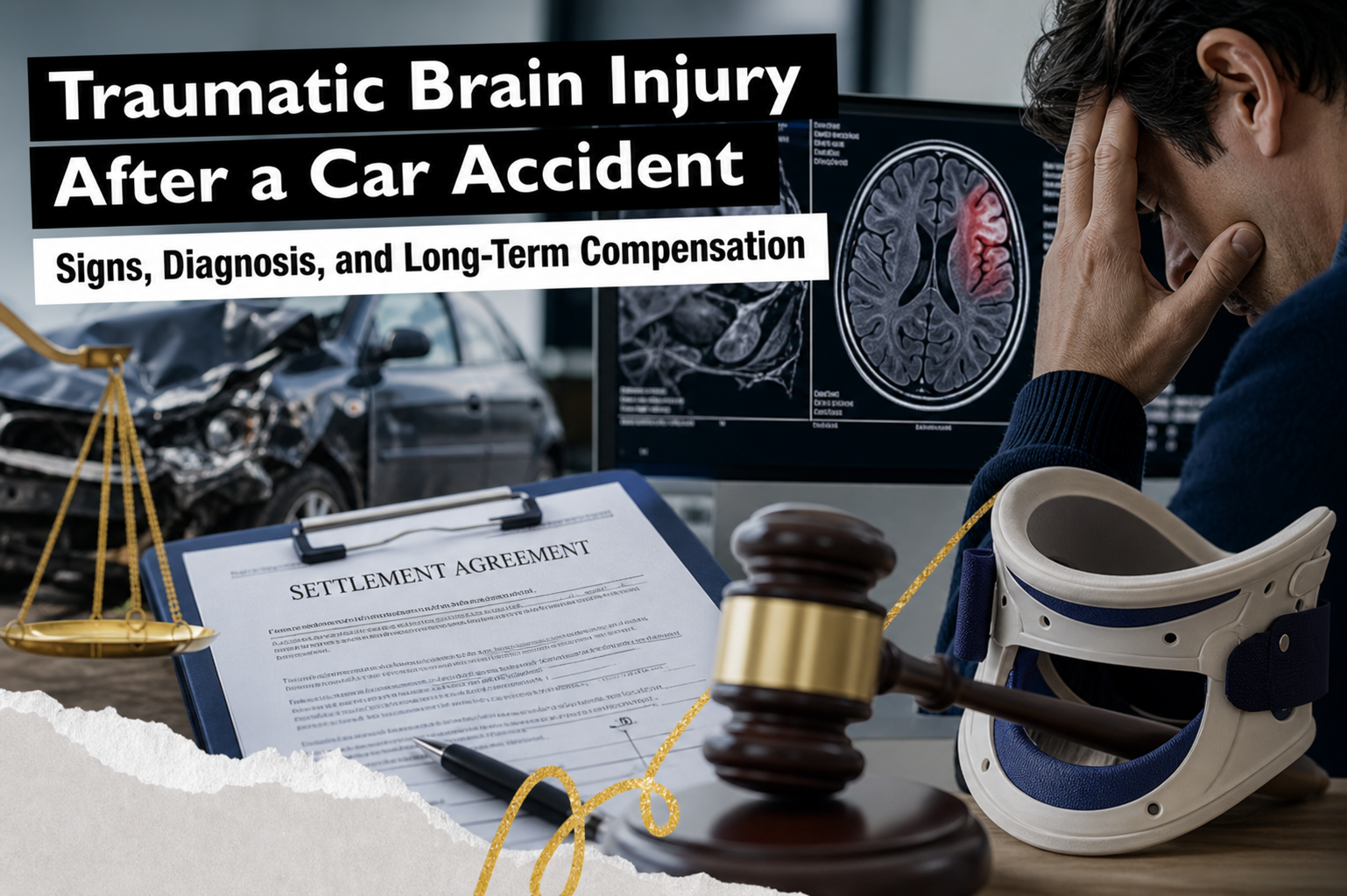
Not every serious injury from a car accident shows up right away. You can walk away from a crash feeling shaken but otherwise fine, only to notice something’s off days or even weeks later. Headaches that won’t go away, trouble concentrating, mood swings that seem out of character. This delayed pattern is exactly why traumatic brain injuries get missed so often, and why understanding the signs matters as much as understanding what compensation actually needs to cover.
That’s why here at Demesmin & Dover Law Firm, we believe in making things clear, this way you know exactly what you’re dealing with if you or someone you love may have a brain injury after a crash.
How Common Are TBIs From Car Accidents?
Traumatic brain injuries are far more common than most people realize, and car accidents are one of the leading causes.
The National Numbers
According to the CDC, there were more than 69,000 TBI-related deaths in the United States in 2021, roughly 190 deaths every day, and the agency identifies motor vehicle crashes as one of the most common causes of TBI alongside falls, firearm injuries, and assaults. The CDC’s more recent data shows there were approximately 214,110 TBI-related hospitalizations in 2020 and 68,663 TBI-related deaths in 2023, underscoring that this remains a persistent, ongoing public health issue rather than something that’s improved dramatically in recent years.
Most Injuries Are Called “Mild,” But That Word Is Misleading
The CDC is careful to note that most brain injuries, including most concussions, are classified as mild. That classification refers to the initial severity of the injury, not how serious its effects can be. Mild TBIs can still lead to real, lasting challenges with memory, concentration, and problem solving, which is exactly why they shouldn’t be dismissed just because someone didn’t lose consciousness or require surgery.
Signs of a Traumatic Brain Injury After a Crash
Some symptoms show up immediately. Others take time to surface, which is part of what makes TBIs so easy to miss in the chaos immediately following an accident.
Physical Signs
- Headaches that persist or worsen over time
- Dizziness or loss of balance
- Nausea or vomiting
- Blurred vision or sensitivity to light
- Fatigue that doesn’t improve with rest
Cognitive and Emotional Signs
- Confusion or difficulty concentrating
- Memory problems, especially around the accident itself
- Slowed thinking or trouble finding words
- Mood swings, irritability, or uncharacteristic emotional responses
- Sleep disturbances, either sleeping far more or far less than usual
Why Delayed Symptoms Are So Common
Adrenaline and shock immediately after a crash can mask symptoms that become obvious once that initial surge wears off. This is a big part of why medical evaluation right after an accident matters, even when someone feels fine in the moment.
How Doctors Diagnose a TBI
Diagnosis typically starts with a quick, standardized assessment and moves toward imaging when warranted.
The Glasgow Coma Scale
According to Mayo Clinic, doctors and first responders often use the Glasgow Coma Scale, a 15-point test that evaluates a person’s ability to follow directions, move their eyes and limbs, and speak coherently, to quickly assess the initial severity of a brain injury. Higher scores indicate a less severe injury, and the scale helps guide how urgently further evaluation and imaging are needed.
Imaging and Further Evaluation
CT scans are typically used first to check for bleeding, swelling, or structural damage, since they can be done quickly in an emergency setting. MRI scans may follow for a more detailed look, particularly when initial imaging doesn’t fully explain a person’s symptoms. For milder injuries where imaging comes back clear, neuropsychological or neurocognitive testing can help identify functional problems with memory, attention, and processing speed that don’t show up on a scan at all.
What Long-Term Compensation Actually Needs to Cover
A TBI settlement isn’t just about the emergency room bill. The real cost of these injuries often unfolds over months or years.
Medical and Rehabilitation Costs
This includes ongoing neurological care, cognitive rehabilitation, physical therapy, and any medication needed to manage lasting symptoms.
Lost Income and Reduced Earning Capacity
Cognitive symptoms like slowed processing, memory issues, or difficulty concentrating can affect someone’s ability to return to their previous job, or any job, at the same level as before.
Long-Term Care and Support Needs
More severe TBIs can require ongoing assistance with daily tasks, home modifications, or specialized care, all of which need to be accounted for well beyond the initial recovery period.
Non-Economic Impact
Pain and suffering, loss of enjoyment of life, and the strain a brain injury can put on relationships and daily functioning are all real damages, even though they don’t come with an itemized bill.
What to Do If You Suspect a Brain Injury After a Crash
A few steps make a real difference, both for your health and for documenting what happened.
- Get evaluated by a doctor immediately, even if you feel fine. Delayed symptoms are common, and early documentation matters if symptoms do appear later.
- Follow up if new symptoms appear, even days or weeks after the accident. Don’t assume it’s unrelated just because time has passed.
- Keep a symptom journal. Headaches, memory lapses, mood changes, and fatigue are easy to forget or minimize in hindsight, but a running record captures the pattern clearly.
- Follow through on all recommended treatment and rehabilitation. Gaps in care can be used to argue an injury wasn’t as serious as claimed.
- Ask your doctor about neuropsychological testing if cognitive symptoms persist, even when imaging comes back normal.
Do You Need an Attorney for a TBI Claim?
Brain injury cases are uniquely difficult to value because the full extent of the injury often isn’t clear right away. An attorney can help make sure long-term costs, not just the immediate medical bills, are properly accounted for, and can push back against insurance companies that try to use a “mild” diagnosis or a delay in symptoms to minimize a claim.
Talk to an Attorney About Your TBI Claim
Brain injuries don’t always look serious on the surface, but their impact can last a lifetime, and a fair settlement needs to reflect that.
The team at Demesmin & Dover Law Firm has experience handling traumatic brain injury claims, including the long-term costs that insurance companies often try to downplay. Contact Demesmin & Dover today for a free consultation, there’s no fee unless we win your case.