You filed your car accident claim, sent in your photos and repair estimate, and did everything the insurance company asked. Then a decision came back fast, and lower than you expected. What you may not realize is that the “adjuster” reviewing your claim might not be a person at all, at least not at first. Increasingly, it’s software.
Here at Demesmin & Dover Law Firm, we want Florida and Illinois car accident victims who have filed a claim, or are about to, to understand how that technology can shape the outcome. We explain how AI is used in car accident claim evaluations, the common ways it affects insurance decisions, the risks that can lead to undervalued settlements, what you can do to protect your claim, the Illinois and Florida rules that matter, and when a lawyer can help challenge an AI-driven decision.
The Simple Explanation of AI in Car Accident Claims
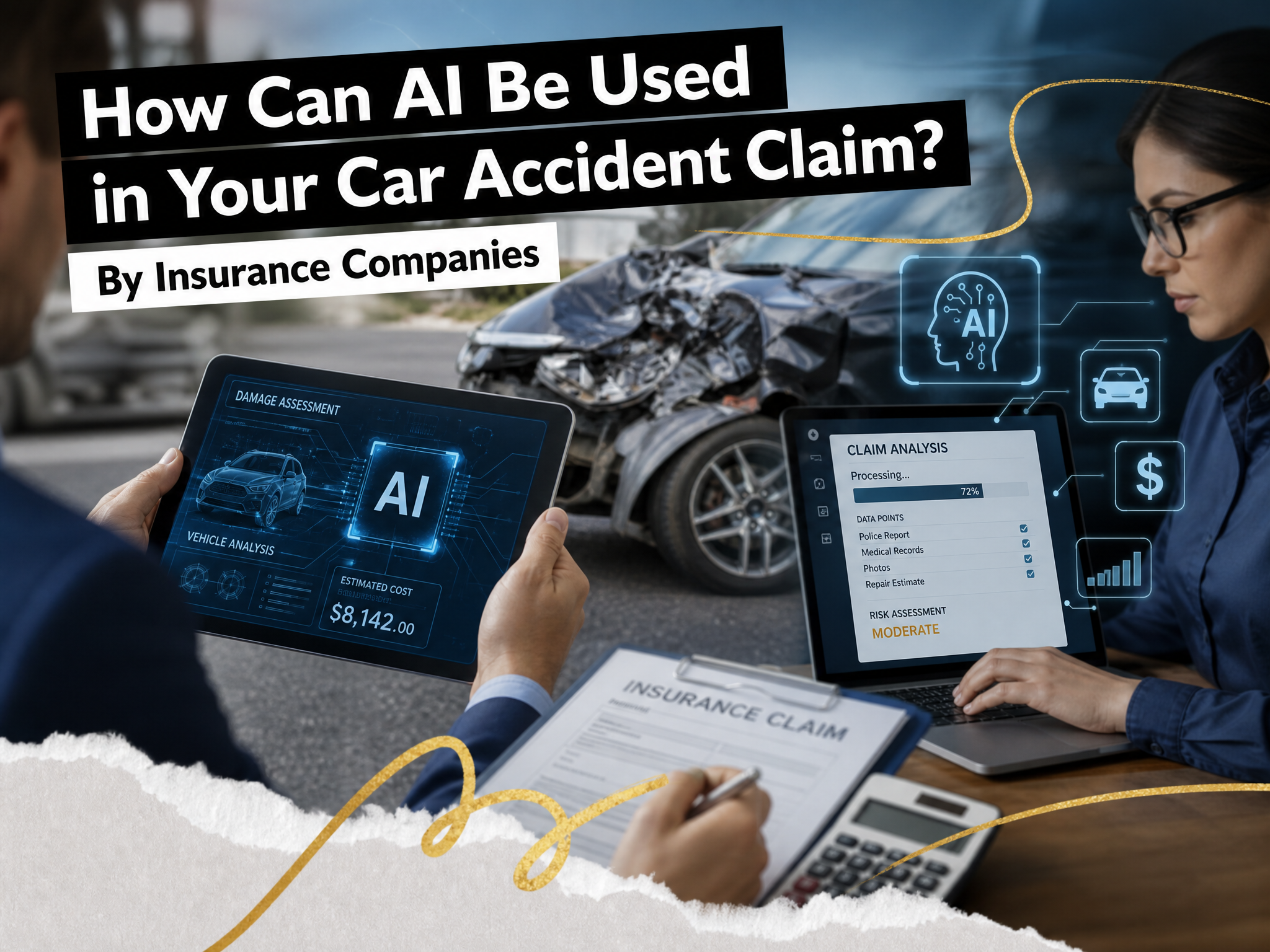
Now that AI has entered the personal injury game , it works just like you would imagine. It is taking the claims process and shortening the review time drastically. Basically the software scans your claim, photos of vehicle damage, repair estimates, medical records, police reports and then flags, values, or recommends a decision on it, often before a human adjuster ever looks at it.
Auto insurers have leaned into this technology more than almost any other line of coverage. A National Association of Insurance Commissioners (NAIC) survey of nearly 200 personal auto insurers found that 88% already use, plan to use, or are exploring AI/ML tools in their operations. Which it the highest adoption rate of any insurance line surveyed.
Knowing where AI shows up in your car accident claim and how it can work against you is what actually matters. That’s why we want to walk you through it.
How Insurance Companies Use AI to Evaluate Your Claim
AI typically gets involved the moment you submit your claim, often before you’ve spoken to a person. Common examples in auto claims include:
Damage estimation: You upload photos of your bumper or door panel, and image recognition software estimates repair costs sometimes missing structural or mechanical damage a body shop would catch in person.
Injury valuation: Software analyzes your medical records, diagnosis codes, and treatment history to generate a settlement value. One widely used system in the industry is Colossus, first adopted by major auto carriers in the 1990s and still influencing how bodily injury claims get scored today.
Fraud and liability flags: AI cross-references your claim against databases and prior claims history, which can flag a legitimate claim as suspicious based on patterns that have nothing to do with what actually happened.
In each case, software is doing something a human adjuster used to do deciding what your car accident claim is worth, or whether parts of it get denied often within seconds.
Why Can AI Hurt Your Case?
A car accident claim isn’t just numbers on a form, it’s the specifics of what happened to you, your vehicle, the real injuries involved, and any property damage. AI systems do not have that human connections or touch therefore they aren’t always built to capture every aspect that goes into a claim. To make this a little simpler to understand here are some common examples of the ways this can work against you:
It can miss context a person would catch. A photo-based estimate can’t see a lingering vibration, a check-engine light that came on after the crash, or an injury that takes days to show symptoms. It is just strictly going on what it sees rather than deducing the actual future cost that individual could occur due to pain and suffering or the vehicle could incur once getting inspected.
It’s built to anchor low. Claims software is generally designed to generate a starting number, not a final one and that number is calibrated to be easy for the insurer to defend, not necessarily fair to you. When early data is incomplete, it may also undervalue medical expenses and non-economic harm.
It can penalize you for having representation. Reporting has noted that some claims evaluation systems factor in whether you have an attorney, which can affect how your claim is scored from the start.
Errors can compound with little accountability. If the underlying data, for example, a mislabeled diagnosis code or an incomplete police report, is wrong, then the AI’s output is wrong too, and it’s not always obvious that’s what happened.
Ways to Be Careful When AI May Be Involved in Your Insurance Claim
You can’t stop an insurer from using AI, but you can reduce the chances it works against you:
Document everything, in detail. Take wide and close-up photos of all damage, not just the obvious points of impact, and get a written repair estimate from an independent body shop.
Get medical care and follow through on treatment. Gaps in your medical records are exactly the kind of thing automated systems flag against you.
Don’t accept the first number. Treat an early settlement offer as a starting point for negotiation, not a final answer.
Ask directly if AI was used. You’re entitled to ask your insurer whether an automated system was involved in valuing or denying your claim, and to request a human review.
Keep a written record of every communication. If you ever need to challenge a decision, a clear paper trail of calls, emails, and submissions matters.
Laws Regarding AI Use in Car Accident Claims: Illinois and Florida
Illinois: The Illinois Department of Insurance issued Company Bulletin 2024-08, reminding insurers that any decision affecting a consumer, including a claims decision, made or supported by AI must still comply with existing insurance laws, including protections against unfair trade practices and unfair discrimination. Illinois was also among the first states to adopt the NAIC’s Model Bulletin on AI, meaning Illinois regulators expect documented governance over how insurers develop and use these systems, and can request that documentation during an investigation.
Florida: Florida lawmakers have been more aggressive. HB 527, which cleared its first House committee unanimously and was later expanded to cover property and casualty claims (including auto), would prohibit insurers from using AI, algorithms, or machine learning as the sole basis for denying or reducing a claim. Under the bill, a “qualified human professional” would have to make the final call on any denial, and insurers would have to disclose in writing how AI is used in their claims process. As of this writing the bill has not yet been signed into law, so Florida drivers should not assume this protection is automatically in place but it signals where the state is headed.
Neither state currently bans insurers from using AI in car accident claims altogether, the trend is toward requiring human oversight and disclosure, not eliminating the technology.
Do I Need a Car Accident Attorneys If AI Was Involved in My Claim?
If your car accident claim was denied or undervalued and you suspect software made that call, you’re not powerless, but you are up against a system built to move fast and pay out as little as possible. An attorney can request documentation on how your claim was evaluated, push back on a lowball number, and make sure a human being actually reviews the facts of your accident before your case is closed out.
Talk to an Attorney Before You Accept an Offer
Whether it’s a person or a piece of software reviewing your car accident claim, the insurance company’s goal is the same: protect their bottom line. If the accident happened and an offer came quickly, be cautious before dealing further with the insurance company or the other party. That’s why it’s worth having someone in your corner who knows how these systems work.
The team at Demesmin & Dover Law Firm has experience going toe-to-toe with insurance companies algorithm-driven or not to fight for the full compensation Florida and Illinois accident victims deserve.
Contact Demesmin & Dover today for a free consultation; there are no upfront legal fees, and there’s no fee unless we win your case.